What should a new brand for women over 40 stand for?
What this is, what data, what framework
A panorama of the European supplement category for women over 40 — the register the incumbents occupy, the cultural codes in play, the macro forces reshaping the category, and the position left open for a new brand. Competitor analysis, observational. Prepared for a founding team weighing a launch; the launch decision itself is left to them.
- Public sources
Market research (Euromonitor, Mintel, Grand View, CBI, NielsenIQ commentary), company disclosures (Vitabiotics, Uriach, Venture Life Group, Holland & Barrett), European and Spanish health and trade press, supplement-industry coverage (NutraIngredients, Vitafoods).
- Cultural signal
Brand communications and packaging, public social media, the menopause-creator content economy, European editorial press, public campaign imagery.
- Canonical research
Bourdieu, Williams, Mauss, Mary Douglas. On age and gender: Simone de Beauvoir, Susan Sontag's “The Double Standard of Aging.” Mediterranean: the sociology of the Spanish family and the matriarch.
Production version wires live Euromonitor, Mintel, NielsenIQ, Spins, Brandwatch and Google Trends.
- Four-lens model
Category Default · Category Position · Outside-In Forces · Cultural Codes. With no focal brand, lens one reads the incumbent register rather than a single company.
- Region engine: Europe (Spain-anchored)
The pharmacy / parafarmacia channel as the structural spine of Continental supplement retail. The North–South European split in how age and the older woman are coded. The Mediterranean matriarch as a cultural asset Anglo markets do not have. Constructed for this analysis — not a hand-built deep engine.
- Adversarial quality layer
Twelve quality checks against the synthesis before the deliverable ships — first-order detection, client-flatter detection, Anglo-default detection, voice fidelity, epistemic-warrant, client-data-primacy audit, and others.
- Epistemic-status tagging
Every analytical term in this deliverable is tagged: canonical (peer-reviewed academic concept), documented (real phenomenon in journalism / industry data), observed (cultural pattern named here without formal academic framing), or inferential (this analysis's own synthesis). The reader can see at a glance which kind of warrant each claim rests on. Mixing the four without distinction is what bleeds credibility.
- Client-data primacy
Data the buyer provides — via API connection or report upload — is canonical. The pipeline treats it as the primary source of truth. Public press, free APIs and the canonical library cross-reference and extrapolate from it; they never override or contradict it. When sources disagree, buyer data wins. Enforced by the adversarial layer before the deliverable ships.
- Visual-provenance audit
Every illustrative image declares what it actually depicts, right next to the claim it illustrates. Each image is tagged verified (a real, documented artifact or location) or reference (an illustrative proxy, register-accurate but not the literal subject). Stereotyped and mislabelled imagery dies here.
Hover any underlined term in the text to surface its definition; click to jump to the full glossary.
- Williams' state model
Five states a cultural code can occupy — saturated, dominant, emergent, residual, unclaimed.
- the menopause moment
The cultural shift, since roughly 2021, from menopause hidden to menopause discussed and claimed.
- the decline frame
This analysis's name for the category's default story — midlife as a deterioration to be slowed.
- la matriarca
The Mediterranean older woman as the respected authority of the family — a regional cultural asset.
- the pharmacy channel
The farmacia / parafarmacia — the credibility-granting, ailment-coding spine of Continental retail.
Observational. The launch decision itself is left to the founding team.
What we found.
The European supplement category for women over 40 is large, growing, and selling the wrong story — midlife as a decline to be managed. The consumer has decided she is not in decline. The opening is a longevity-and-vitality brand for the midlife woman, in a voice that is warm and authoritative — a bridge no existing brand can build.
- 01The hypothesis →
The category sells decline; the consumer is no longer in decline.
The traditional brands sell relief from menopause symptoms — “support through the menopause.” But three forces have remade the woman they speak to. Menopause has stopped being a taboo. Hormone replacement (HRT) and weight-loss drugs (GLP-1, Ozempic) have normalised. Longevity has become the dominant frame in health.
- 02Brand Deep Dive →
The existing brands cannot move out of that frame.
What makes them trusted is exactly what traps them: the word “menopause” baked into their names (Menopace, Aquilea Menopausia) and the pharmacy shelf they sell from. Neither can be dropped without losing their credibility.
- 03Category Deep Dive →
The open position is longevity and vitality, built for her.
The most energetic frame in health today is built for men and obsessed with youth. Clinical menopause-relief treats her as ageing. No brand sits between the two.
- 04Outside-In →
The real competition is the doctor and the gym, not another supplement.
A finite midlife-health budget is contested by hormone replacement (HRT), weight-loss drugs (GLP-1, Ozempic), the smartwatch, and the strength-training habit. A read of the category that stops at the supplement shelf will misjudge the contest.
- 05Cultural Codes →
Spain hands the brand an asset Anglo markets do not have.
La matriarca — in Mediterranean culture, the older woman is the family's authority, not its background figure. A Spain-anchored brand inherits this foundation; a London brand has to build it from scratch.





What should a new brand for women over 40 stand for?
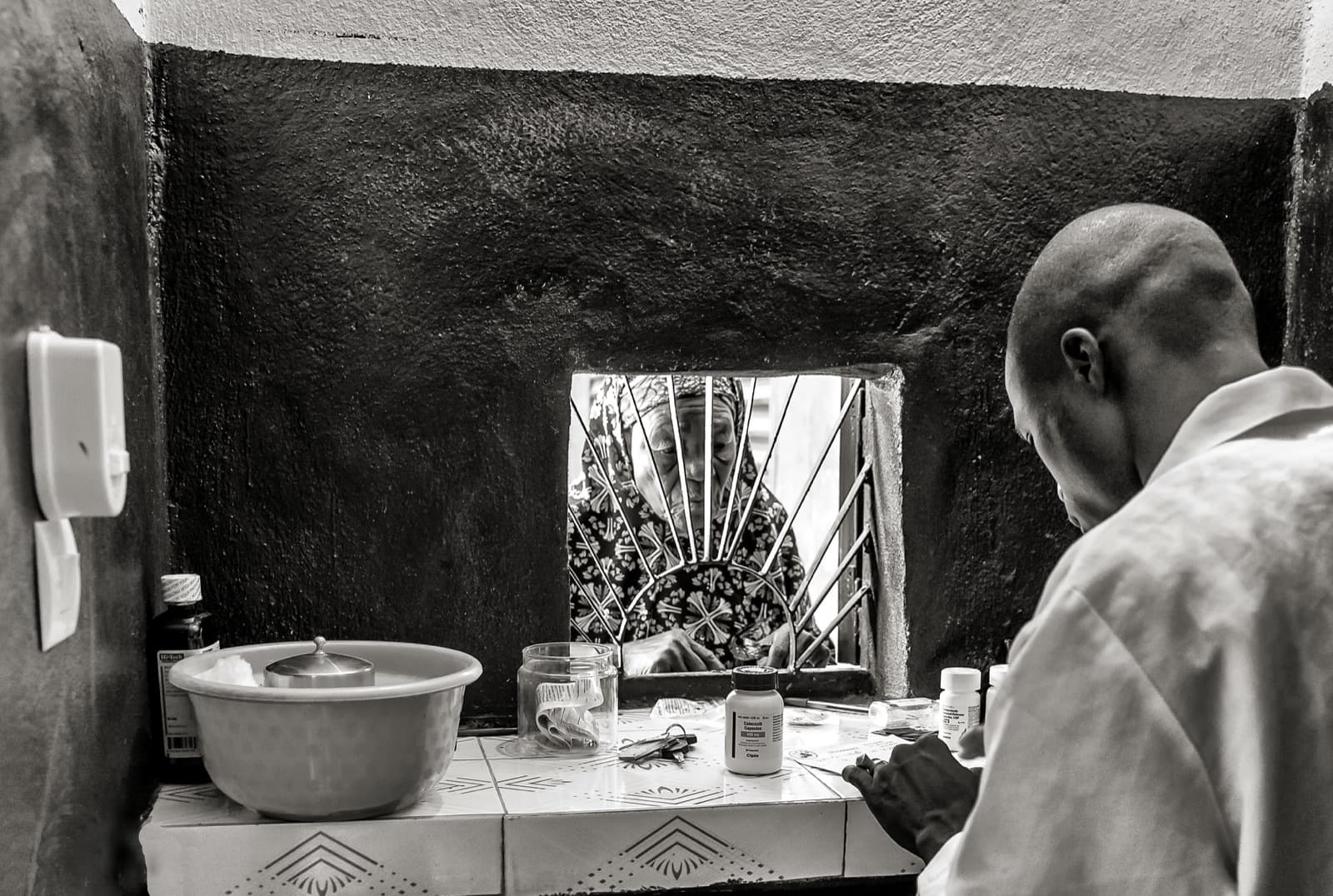
A Spanish farmacia, and a category at a turning point. The shelf still sells the years after 40 as a decline to be managed. The woman reaching for it has already decided she is not in decline.
The European supplement category for women over 40 is built on a frame the consumer is quietly walking away from. The legacy category — pharmacy-shelf, soy-isoflavone, sold as “menopause relief” — treats midlife as a medical problem to be managed and a decline to be slowed. But the woman over 40 in 2026 has been changed by three forces at once: the destigmatisation of menopause has made it something to own rather than hide; the longevity culture has reframed ageing as something to optimise rather than endure; and she is more health-literate, more tracked and more informed than any midlife cohort before her. She has decided she is not in decline — and the category is still selling her decline management. The structural opening is precise: the category owns the word “menopause,” but the consumer is leaving “menopause” behind as an identity. Menopause symptoms are the urgent trigger that makes her buy; a “menopause brand” is a poor thing to buy into. The white space is a longevity-and-vitality brand for women in midlife — a frame that today is split between clinical menopause-relief that feels like ageing and a biohacking-longevity culture that is coded male and youth-obsessed. No brand owns the bridge.
- 01Growth should be concentrating in modern, lifestyle-coded, direct-to-consumer and quiz-led brands, and in propositions framed as “vitality” or “longevity,” while pharmacy-shelf “menopause relief” grows roughly with the demographic, not above it.
- 02The fastest-growing formats should be the ones that do not read as medicine — gummies, powders, drinks — over the white tablet and capsule.
- 03New launches should be doing two things at once: getting more symptom- and stage-specific in their formulation, while trying to escape the word “menopause” in their masterbrand naming.
- 04If false, the category would simply track the number of women entering menopause — the pharmacy “relief” segment would hold its share, and brand register would be irrelevant to where the growth lands.
The rest of this analysis tests the hypothesis. We find it confirmed.
The data foundation.
The chart index values in this section are placeholders that demonstrate the analytical output — not pulls from Euromonitor / Mintel / NielsenIQ. Market figures quoted in the commentary are directional, from public research. Production deployment wires live data from the buyer's existing subscriptions. The frameworks, structural reads and directional claims hold; the specific index values do not.
Europe accounts for roughly a quarter of the global menopause-supplement market, with the UK growing fastest (high-single-digit annual growth) and Germany anchored in phytoestrogen botanicals. Spain's women's-health-and-beauty supplement market was worth around €750m in 2024 and is forecast to grow about 6% a year to the end of the decade.
In Spain the pharmacy and parafarmacia channel leads the category and is itself growing — pharmacy supplement sales rose roughly 9% year on year. Pharmacy grants credibility; it also frames the product as a remedy for an ailment.
The register is shifting under the numbers. Modern menopause brands have drawn real investment — Venture Life Group acquired Health & Her in late 2024 — and gummies have become the fastest-growing format. New launches are going stage- and symptom-specific while reaching, visibly, for a vocabulary other than “menopause.”
Modern, lifestyle-coded midlife-health brands have grown roughly five-fold since 2018, while the legacy pharmacy “menopause relief” segment's share of the category has fallen by nearly a third. The category is not just growing — it is changing hands.
The woman buying into this category does not behave like a patient managing a decline. She lifts weights, tracks her sleep, follows longevity science, and is on — or considering — HRT. She is optimising, not coping.
Follow longevity or healthspan content
3.1×
Do structured strength or resistance training
2.9×
Use or are actively considering HRT
2.6×
Use a health-tracking wearable
2.4×
Hold onto the weights and the wearable. They come back — and they matter — when we get to what is really reshaping this category.
The category default, read.
There is no brand to deep-dive — the founding team has not launched yet. So this section does the next most useful thing: it reads the category's dominant incumbent register — the default a new brand will be measured against — and the latent position that default has left open. McDonald's had KFC; this analysis has the white space.
The position no brand is claiming.
There is no brand to deep-dive yet — so this reads the category's dominant default, and the three structural openings it has left unclaimed.
“Menopause” is the trigger and the trap. It is the urgent, searchable, symptom-driven reason a woman over 40 finally buys — and it is a poor identity to buy into, because it is read as the start of old age. The legacy brands have the word baked into their names (Menopace, Aquilea Menopausia). They cannot drop it. A new brand can.
Longevity and optimisation — the most energetic frame in all of health right now — is, as it stands, coded male and youth-obsessed: the biohacker, the protocol, the 35-year-old founder. There is no longevity brand built for, and in the register of, a woman in midlife. The frame exists; it has simply never been pointed at her.
Pharmacy grants instant credibility and frames the product as a remedy for an ailment. Direct-to-consumer and lifestyle retail grant desirability and freedom of register but carry a credibility tax. Whichever a new brand leads with defines its ceiling. The unclaimed move is a brand that earns pharmacy-grade trust without wearing pharmacy's ailment coding.
The legacy category is structurally stuck. Its equity is the menopause word and the pharmacy shelf; its visual language is clinical white, soft pastel and the reassuring botanical leaf; its verb is “relief.” It cannot move to a vitality or longevity frame without abandoning the very assets that make it credible. That immobility is the opening. The incumbents are not badly run — they are correctly run for a frame that is ageing out from under them.
The format, not the formula.
In this category the format is not a detail — it is the positioning. The same active ingredients behave like three different businesses depending on the form they take, because each form carries its own cultural code: medicine, treat, or ritual.

The capsule and tablet — the pharmacy default
The legacy form. Soy isoflavones, vitamins and minerals pressed into a white tablet or capsule, blister-packed, pharmacy-shelved.
Reads, unavoidably, as medicine. Maximum credibility, minimum desire. It signals “you have a condition.”
The pharmacy and parafarmacia shelf; the bathroom cabinet next to the painkillers.
The capsule is the safest format and the one most locked into the decline frame. A new brand that leads with it inherits credibility and the ailment coding in the same breath.

The gummy — the fastest-growing form
Active ingredients in a chewable sweet. Now the fastest-growing delivery format in the category — an estimated 15–20% of unit sales in leading markets.
Escapes the medicine cage entirely — reads as a treat, a small daily pleasure. But it carries a credibility tax: a gummy can struggle to be taken seriously on efficacy.
Lifestyle retail, supermarkets, direct-to-consumer; the kitchen counter, not the cabinet.
The gummy is where desire is growing fastest and where the seriousness problem is hardest. Resolving that tension — pleasurable form, genuine clinical backing — is itself a white space.
The powder and daily drink — the ritual form
A measured scoop mixed into water or a morning drink — the form the longevity and greens-powder world has made aspirational.
A format that is a ritual: a daily, visible, deliberate moment of self-investment. It codes as optimisation, not treatment.
The kitchen, the morning routine; the same shelf as the protein and the greens powder.
The powder is the format most native to the longevity-and-vitality frame and the one that turns a supplement into a habit and an identity. It is also the hardest to make feel premium rather than worthy.
Reference imagery for the registers the category occupies and the one it has left open. Production version sources real, rights-cleared category and campaign imagery.


What the incumbents are currently saying in market, captured from public packaging and brand communications.
Production version pulls these from live Brandwatch, retailer-site and brand-channel capture, refreshed weekly.
Clinical menopause relief
““Support through the menopause.” Soy isoflavones, vitamins and minerals; the reassurance of the pharmacy; symptom relief, phase by phase.”
Credible, trusted, and squarely inside the decline frame. The register is built for a patient, not a protagonist. It is correctly executed for a story that is ageing out.
Generic women's 50+
“A daily multivitamin “for women 50+.” Broad, undifferentiated, age-segmented by number.”
Defines the woman purely by an age bracket and asks nothing of her. No point of view on midlife — just a demographic and a tablet.
Says, offers, need.
Relief, support, balance. The category speaks in a soft clinical register — “support through the menopause,” “helps to maintain,” soy isoflavones and the reassuring pharmacist. It is the vocabulary of managing a problem.
Beneath the relief, at its honest best, the category offers a woman permission — permission to treat her own midlife body as worth time, attention and money, rather than as vanity, hypochondria or fuss. It legitimises spending on herself.
The structural human need to remain recognisably and fully oneself across a life transition that the surrounding culture frames as a diminishment. Most cultures ritualise major passages; modern Western culture under-ritualises midlife for women and codes it as a quiet exit — the start of becoming invisible. The daily supplement, at its deepest layer, is a small act of refusal: I am still here, still investing, still becoming. The brand that understands it is selling continuity, not relief, is selling the right thing.
Archetype position.
The Caregiver
Jungian — the incumbent default
To be soothed, reassured, looked after. The gentle pharmacist, the warm hand on the arm.
Infantilising. Treats the woman as a patient managing a decline — and a patient is, by definition, someone things are being done to.
The pastel packaging, the “support” language, the soft-focus tone of legacy menopause brands. This is the register the category is stuck in.
The Sovereign
Jungian — the white-space move
To claim authority, not relief. Midlife as coming into command — of her body, her knowledge, her time, her decisions.
Coldness, hardness, the optimisation treadmill. Power without warmth reads as the male biohacker, and that is not the win.
Almost entirely unclaimed in this category. The brand that fuses Sovereign authority with genuine warmth occupies a position no incumbent can reach.
La Matriarca
European Tier 3 (region-canonical — Mediterranean)
To be the respected centre of gravity — the older woman as the family's authority and knowledge-holder, not its background figure.
Tradition as constraint; the matriarch defined only through the family, never through herself.
In Spanish and Mediterranean culture the older woman is coded as power, not as invisibility — a cultural asset Anglo markets, with their disappearing-midlife-woman script, simply do not have. A Spain-anchored brand can build on a foundation a London brand has to manufacture.
The category, seen from inside.
| Who | What they say | Position signal |
|---|---|---|
Legacy pharmacy menopause brands | Clinical relief, soy isoflavones, support through the menopause | Pharmacy credibility and trust; locked into the decline frame |
Modern DTC menopause brands | Destigmatised, founder-led, let's talk about it | Register, design and community; still “menopause”-defined, still relief |
Mass multivitamins (Centrum 50+, own-label) | A daily vitamin for women 50+ | Distribution and price; no point of view on midlife |
Longevity & biohacking brands | Optimise your healthspan — protocols, cellular health, performance | The most energetic frame in health — but coded male and youth-obsessed |
Beauty-adjacent “inner beauty” brands | Collagen, glow, beauty from within | Desire and aesthetics; sidesteps the harder midlife-health jobs |
The category is pulled between two unresolved oppositions. The first is the frame: midlife as a decline to be relieved versus midlife as a life stage to be optimised — and almost every brand sits on the decline side. The second is the trade-off: pharmacy credibility that codes the product as a remedy for an ailment, versus lifestyle desirability that codes it as wanted but unserious. No brand has resolved either tension. The category that emerges in the next three years will be defined by whoever does.
The position is unclaimed and specific: a longevity-and-vitality brand for women in midlife. Not “menopause relief” with better design — a brand that takes the energy, ambition and optimisation language of the longevity world and points it, for the first time, at the woman over 40, in a register that is warm rather than clinical and authoritative rather than soothing. It would earn pharmacy-grade credibility without wearing pharmacy's ailment coding. It would solve the real menopause jobs-to-be-done without making “menopause” its identity. No incumbent can move there — their equity is the word and the shelf they would have to leave behind.
Category context: what the modern challenger brands are saying — included here to map where the register is already moving.
Destigmatised, lifestyle menopause
““Let's talk about menopause.” Founder-led origin stories, plain talk, modern design, the symptom tracker, the community.”
A real and successful break from the pharmacy register — warmer, franker, better designed. But still organised around the word “menopause” and still, fundamentally, a relief proposition with better manners.
Symptom precision
“Distinct formulations for distinct symptoms and stages — perimenopause versus menopause versus post — a system the woman assembles for herself.”
The leading edge of the relief frame: precise, personalised, intelligent. Still answers the question “how do I manage this?” rather than “what do I want to become?”
The macro forces reshaping the category, and the midlife-health budget under contest.
Four forces operating outside the “which menopause supplement” frame — none visible in within-category analysis.
The menopause moment
Active across Europe, strongest in the UK and arriving in Spain. Since roughly 2021, menopause has moved from hidden, to openly discussed, toward openly claimed.
The medicalisation of midlife — GLP-1 and HRT go mainstream
Active and accelerating. HRT prescribing has normalised; GLP-1 weight-loss medication has surged among women over 40.
The longevity turn
Active and mainstream. Healthy ageing now rates as a top priority for the large majority of consumers — but the longevity culture is coded male, youth-obsessed and protocol-driven.
Personalisation and the data layer
Active. Quiz-led recommendation, wearables, at-home testing and subscription regimens are reshaping how supplements are chosen and sold.
Four macro forces are jointly reframing midlife itself — from a decline to be relieved into a life stage to be actively run — while the category's register stays stuck in relief.
- 01The menopause moment turns a hidden condition into a claimed identity, and dates the euphemistic register that defined the category.
- 02The medicalisation of midlife — HRT and GLP-1 — means a woman is already treating her midlife with a doctor; the supplement must define what it adds.
- 03The longevity turn reframes ageing as optimisation, but addresses that frame to men and the young, leaving the midlife woman unserved.
- 04Personalisation makes the generic “women's 50+” SKU obsolete and the tailored system the credible unit.
The competitive frame this opens is far wider than one supplement against another. The contest is over how midlife itself is framed — and the brands organised around relief of a decline are selling a story their own customer has stopped believing. The category is not short of demand. It is short of a brand that has noticed.
The real competitor is the doctor and the gym.
A woman over 40 has a finite midlife-health budget — of money, attention and willpower. The supplement is competing for it against things that are not supplements at all.
Cultural codes.
Saturated · Dominant · Emergent · Residual · Unclaimed
Saturated
Every brand uses these — they're noise.
 reference
Dusty pinks and lilacs, soft focus, a serene older woman with a knowing half-smile. The default visual of menopause marketing — so universal it now signals “menopause category” and nothing more specific.
Image provenance:Reference image: soft-toned botanical imagery. Illustrative of the pastel category cliché, not a documented campaign asset.
 reference
“Balance,” “harmony,” “support,” the single botanical leaf. The reassuring vocabulary of the soft clinical register — present on nearly every pack, claim-free and now invisible.
Image provenance:Reference image: botanical ingredients. Illustrative of the “balance / botanical” cliché, not a documented campaign asset.
 reference
The optimistic lifestyle counter-cliché — “thrive,” “flourish,” “your best chapter” — adopted so widely by the modern brands that it has become its own wallpaper. Aspiration with no specific content.
Image provenance:Reference image: an assortment of pills and supplements. Illustrative of the lifestyle-copy cliché, not a documented campaign asset.
Dominant
Strong but not yet exhausted. Currently high signal-to-noise.
 reference
Naming menopause directly, frankly, without euphemism — the register the modern brands built and the menopause moment rewarded. Still strong, still working, but now widely adopted.
Image provenance:Reference image: a modern, plainly-designed supplement still. Illustrative of the plain-talk register, not a documented campaign asset.
referenceStudies cited, ingredients dosed to the research, the expert panel. Genuine credibility currency in a category full of weak claims — high signal, and not yet exhausted.
Image provenance:Reference image: capsules on white. Illustrative of the clinical-evidence register, not a documented campaign asset.
reference“I went through this, I could not find what I needed, so I built it.” The dominant origin story of the modern category — authentic and effective, and now so common it is approaching saturation.
Image provenance:Reference image: a blended fruit drink. Illustrative of the founder-origin register, not a documented campaign asset.
Emergent
Forming, future-coded. 6–18 month forward window.
referenceThe healthspan frame — cellular health, energy, the long game — translated out of the male biohacking register and into one built for a woman in midlife. Forming fast; effectively unoccupied.
Image provenance:Reference image: a protein shaker bottle. Illustrative of the longevity / optimisation register, not a documented campaign asset.
 reference
Muscle preservation as the midlife priority — protein, creatine for women, the supplement as a partner to resistance training rather than a substitute for it. A genuinely emerging, evidence-led code.
Image provenance:Reference image: a protein shaker bottle. Illustrative of the strength / muscle register, not a documented campaign asset.
referenceNaming what the category still will not — libido, rage, weight redistribution, the brain fog that genuinely frightens. The next step beyond plain talk: not just naming menopause, but naming the parts of it still treated as unsayable.
Image provenance:Reference image: a modern, plainly-designed supplement still. Illustrative of the candour register, not a documented campaign asset.
Residual
Recoverable from the culture — strongest for a Spain-anchored brand.
referenceThe Mediterranean matriarch: the older woman as the respected centre of the family, holder of authority and knowledge. A residual cultural code a Spanish brand can reactivate — and one Anglo markets, with their invisibility script, do not possess.
Image provenance:Reference image: a flowering medicinal herb. Illustrative proxy for the matriarch / regional register, not a literal depiction.
referenceThe long Mediterranean tradition of women's botanical and food knowledge — older than the word “wellness.” A heritage register a Southern European brand can claim with authenticity rather than borrow.
Image provenance:Reference image: botanical ingredients. Illustrative of the Mediterranean-botanical register, not a documented artifact.
referenceThe small, deliberate daily act of care — older than the supplement industry, older than “self-care.” Reframing the supplement as ritual rather than remedy recovers something the culture already holds.
Image provenance:Reference image: a blended fruit drink. Illustrative of the daily-ritual register, not a documented artifact.
Unclaimed
Culturally available — no brand has occupied yet.
The healthspan and optimisation frame built natively for the midlife woman — her register, her priorities, her authority — rather than translated down from the male biohacker.
A brand that openly sells midlife as a performance peak — peak self-knowledge, peak authority, often peak earning — rather than a passage to be eased through.
A proposition defined explicitly as the partner to medical treatment — covering what HRT and GLP-1 leave uncovered: muscle, nutrient gaps, gut comfort — rather than as a vague natural alternative to them.
A brand that earns pharmacy-grade clinical trust while looking and sounding like something a woman genuinely wants on her counter — resolving the category's oldest trade-off instead of choosing a side of it.
Building on the Mediterranean coding of the older woman as authority — and carrying that frame outward, as a Spanish brand's distinctive point of view, into markets whose own culture denies it.
Where the category is now, and where a new brand can take it.
The European supplement category for women over 40 is large, growing and structurally mispositioned. It owns the word “menopause” and the pharmacy shelf, and it sells midlife as a decline to be relieved — to a consumer who has been told by the longevity culture, the menopause moment and her own doctor that midlife is something to actively run. The incumbents cannot move: their equity is the frame that is ageing out. The next 18–30 months decide whether a new entrant claims the longevity-and-vitality position for the midlife woman — or whether the category keeps drifting, well-funded and well-meaning, in the wrong frame.
Saturated on the soft, pastel, decline-coded register. Competing hard on the dominant codes — destigmatised plain talk, clinical evidence, the founder origin story — where the modern menopause brands have genuinely improved on the pharmacy default. Weak to absent on the emergent codes: longevity and optimisation for women, strength and muscle, candour about the unspoken. And blind to the residual regional asset — the matriarch frame — that a Spain-anchored brand could hold alone. The category has more demand, more investment and more noise than ever, and no brand standing in the position the consumer has actually moved to.
Two paths a new brand might take, given the category's structure and the white space.
Launch a sharper version of the modern menopause brand
The new brand enters as a well-designed, plain-talking, clinically-backed menopause brand — a sharper Health & Her. It competes in the dominant codes, on register, design and formulation precision, against well-funded incumbents.
A credible business in a growing category — but a contested one, fought on execution against brands with a head start, and still built inside the decline frame the consumer is leaving. It is the safer launch and the lower ceiling.
The default path — most launches choose it, because the menopause frame is where the proven demand visibly is. The risk is competing well for a position that is already crowded.
Claim the bridge no brand owns
The new brand enters as the longevity-and-vitality brand for women over 40 — solving the real menopause jobs-to-be-done without making “menopause” its identity, fusing pharmacy-grade credibility with genuine desirability, and anchoring its point of view in the matriarch frame.
A harder launch — it has to build a frame, not just a better product, and earn credibility without the pharmacy shelf. But it claims a position no incumbent can follow and rides the strongest tailwind in health into an empty room. Higher difficulty, materially higher ceiling.
Lower probability — it is the harder build — but it is the only path that escapes the crowded frame. It requires the founding team to decide it is building a category position, not a product.
Hanging in the balance — not yet decided.
- Q1
Can a brand solve the menopause jobs-to-be-done without “menopause” as its identity — or is the search-and-trigger pull of the word too strong to give up?
- Q2
How fast does the longevity frame de-couple from its male, youth-obsessed coding — and is there a first-mover window to claim it for women before it does?
- Q3
As HRT and GLP-1 normalise, does the supplement's role shrink to a medical companion, or can a brand build a primary relationship that the drugs do not threaten?
- Q4
Is the Spanish pharmacy channel a credibility springboard a new brand should use — or a frame trap that codes it as a remedy from day one?
Observable signals that would resolve the open questions.
- 01
Naming: do new launches keep “menopause” in the masterbrand, or move it to the back of the pack and lead with vitality, longevity or a coined name?
- 02
Format mix: the rate at which gummies, powders and drinks take share from capsules — the clearest signal of the register shift.
- 03
The longevity brands: any move by an established longevity or healthspan brand toward a women's-midlife line — that would close the white space fast.
- 04
HRT-companion positioning: the first brand to claim the complementary role confidently rather than position against HRT.
- 05
Investment: where capital flows next after the Health & Her acquisition — into more menopause-relief brands, or into the vitality / longevity reframe.
The launch decision is the founding team's to make. The panorama surfaces where the category is, what is reshaping it, and the position no brand has claimed; the move is theirs to define.
Confidence in the deliverable.
Suitable for a founding-team strategy session and for investor-facing use with explicit strategist sign-off on the read. The structural-substitute claims — strength training and unbought behaviour change as genuine competitors for the midlife-health budget — and the Spanish channel and matriarch reads would benefit from European primary research before being committed to launch-stage decisions.
The thinkers and data behind this read.
- Bourdieu, Distinction (1979) — taste, class and the legitimacy of spending on the self
- Williams, Marxism and Literature (1977) — dominant/residual/emergent state model
- Mauss, The Gift (1925) — ritual, obligation and the daily act of care
- Mary Douglas, Purity and Danger (1966) — the body, classification and what a culture treats as unspeakable
- Schwartz, Universals in the Content and Structure of Values (1992) — cross-cultural need organization
- Sutherland, Alchemy (2019); Meadows, Thinking in Systems (2008) — second-order discipline
- Simone de Beauvoir, The Coming of Age (1970) — the cultural construction of ageing
- Susan Sontag, “The Double Standard of Aging” (1972) — how ageing is coded differently for women
- Germaine Greer, The Change (1991); Darcey Steinke, Flash Count Diary (2019) — menopause in culture
- Sociology of the Spanish and Mediterranean family — the matriarch as authority figure
- Carmen Martín Gaite — the inner lives of Spanish women across the life course
- Euromonitor International, Mintel — women's-health and supplement category data
- Grand View Research, CBI — Spain and Europe menopause and women's-health market sizing
- NielsenIQ, Spins — channel and format data (pharmacy, DTC, grocery)
- Company disclosures — Vitabiotics, Uriach, Venture Life Group, Holland & Barrett
- NutraIngredients, Vitafoods, supplement-industry press — launch and trend signal
Honest sourcing note. The chart index values in this prototype are illustrative — placeholder shapes that show what the analytical output looks like. They are NOT pulled from Euromonitor, Mintel, NielsenIQ or any other named source. Market figures cited in the commentary and confidence summary (Spain market size and growth rates, pharmacy-channel growth, the Health & Her acquisition, gummy-format share) are directional and drawn from public market research and company disclosures. Production deployment wires the buyer's live data subscriptions. The qualitative analysis — frameworks, region engine, cultural codes, the incumbent-register read, the format analysis — is the actual analytical work and stands on its cited canonical sources.
The concepts behind this read.
Every term carries an explicit epistemic status. The reader can see whether a claim rests on a peer-reviewed academic concept, a documented real-world phenomenon, an observable cultural pattern that the analyst has named, or this analysis's own synthesis. Mixing these without distinction is what bleeds credibility — so we mark them.
Every glossary entry is tagged. Read the tag before you read the definition.
- canonicalCanonical — peer-reviewed academic concept with traceable lineage.
- documentedDocumented — real phenomenon covered in reputable journalism, cultural criticism, or industry data.
- observedObserved — visible cultural pattern that this analysis names but that lacks formal academic framing yet. Marked as observation, not theory.
- inferentialInferential — this analysis's own synthesis built on canonical, documented, or observed inputs.
- Williams' state model canonical
- Five states a cultural code can occupy: Saturated (everyone uses it, it's now noise), Dominant (still strong, not yet exhausted), Emergent (forming, future-coded), Residual (recoverable from the past or the wider culture), Unclaimed (culturally available, no brand has occupied). The framework lets us read where a category is now and where a brand can move.Raymond Williams, Marxism and Literature (1977)
- menopause documented
- The point at which menstruation has ceased for twelve consecutive months — the end of reproductive years — typically reached in the early fifties. Surrounded, in product terms, by years of symptomatic transition. Crucially for this analysis, it is both the urgent purchase trigger for women over 40 and, as a brand identity, an ageing-coded label many of those same women resist.Standard medical definition; the marketing dynamics are documented across category coverage.
- perimenopause documented
- The transitional years before menopause — often beginning in the early-to-mid forties — when hormone levels fluctuate and most symptoms (sleep disruption, mood change, irregular cycles, brain fog) actually appear. The fastest-growing focus of new product launches, and the stage where a woman is most likely to reject the “menopause” label as not yet applying to her.Standard medical definition; launch focus documented in supplement-industry coverage, 2025–2026.
- HRT documented
- Hormone replacement therapy — prescribed medical treatment that replaces declining oestrogen and progesterone. Its normalisation, especially in the UK, is a structural force for this category: it makes the doctor, not the supplement, a midlife woman's primary intervention, and reframes the supplement's role as either a complement to HRT or an alternative for those who cannot or choose not to take it.Standard medical term; the normalisation trend is documented in health journalism and prescribing data.
- phytoestrogens documented
- Plant-derived compounds — soy isoflavones, red clover, black cohosh — that act weakly on oestrogen receptors. The ingredient base of the legacy European menopause-supplement category, especially strong in Germany and the Spanish pharmacy channel. Genuinely the chemistry of the incumbent register: botanical, gentle, relief-framed.Nutritional science; category prevalence documented in market research.
- GLP-1 documented
- A pharmaceutical class — semaglutide and tirzepatide, marketed as Wegovy, Ozempic and Mounjaro — originally for diabetes, now widely used for weight loss. Adoption among women over 40 is significant and rising. For this category it changes the question a midlife woman asks of a supplement: not “what do I take?” but “what does this do that my medication does not?” — pushing supplements toward a defined complementary role (muscle, nutrients, gut comfort).Pharmaceutical literature; adoption and supplement-companion trend documented in industry coverage, 2026.
- the menopause moment documented
- The cultural shift, accelerating from roughly 2021, in which menopause moved from a hidden subject to an openly discussed and increasingly claimed one — driven by high-profile media, a wave of founder-led brands, and a large, vocal creator economy. It has expanded the category sharply and, at the same time, dated the soft, euphemistic register that defined it.Documented cultural phenomenon, covered extensively in European media and marketing press.
- longevity / healthspan documented
- The reframing of ageing from something to endure into something to actively optimise — extending not just lifespan but healthspan, the years lived in good function. The most energetic frame in consumer health. As it currently exists it is coded male, youth-led and protocol-driven; this analysis treats its translation for the midlife woman as the category's central white space.Why this matters: The longevity trend is documented; the observation that it is coded male and youth-obsessed, and the strategic reading of that as a white space, is this analysis's synthesis.Documented consumer-health trend (Euromonitor, Innova and others); the gendered coding is an observed pattern.
- the decline frame inferential
- This analysis's name for the category's default story: midlife as a deterioration to be slowed and a set of symptoms to be relieved. It is encoded in the legacy vocabulary (“relief,” “support,” “maintain”), the pharmacy channel and the pastel visual register. The hypothesis of this deliverable is that the consumer has moved to an opposing frame — midlife as a stage to be optimised — while the category has not.Why this matters: The constituent facts (category vocabulary, channel, visual codes) are documented; naming them as a single “decline frame” and opposing it to an “optimisation frame” is this analysis's own construction.This analysis's synthesis, built on Sontag and de Beauvoir on the cultural construction of ageing, and on observed category language.
- the pharmacy channel documented
- The farmacia and parafarmacia — the dominant retail channel for supplements across Continental Europe, and the leading and growing channel in Spain specifically. It grants a product instant credibility through the authority of the pharmacist. It also, structurally, frames the product as a remedy for an ailment — credibility and ailment-coding arrive in the same purchase.Documented channel structure; Spain channel leadership and growth from market research.
- DTC documented
- Direct-to-consumer — selling through a brand's own website and subscription rather than through pharmacy or retail intermediaries. The channel of most modern menopause brands. It grants freedom of register, design and data-driven personalisation, and a direct customer relationship; it carries a credibility tax that the pharmacy channel does not.Standard commercial term; channel dynamics documented across category coverage.
- personalisation documented
- The shift from a single SKU to a regimen built for the individual — via health quizzes, wearable data, at-home testing and subscription. In this category it makes the generic “women's 50+” proposition read as lazy, makes the tailored system the credible unit, and becomes a retention engine a one-off pharmacy purchase cannot match.Documented supplement-industry trend, 2025–2026.
- la matriarca observed
- The Mediterranean cultural figure of the older woman as the respected centre of gravity of the family — the holder of authority, knowledge and decision-making, not a background figure. In Spanish and Southern European culture, the older woman is coded as power; in Anglo culture she is coded toward invisibility. This analysis treats la matriarca as a residual cultural asset specifically available to a Spain-anchored brand.Why this matters: Not a peer-reviewed brand archetype. Named here as a region-canonical cultural observation, evidenced by the documented contrast between Mediterranean and Anglo codings of ageing women — used in the role the Brazil engine gives DaMatta's malandro.Grounded in the sociology and ethnography of the Spanish and Mediterranean family, and in the cultural contrast with the Anglo “invisible older woman” script.
- Schwartz universal needs canonical
- A cross-cultural taxonomy of the structural needs every culture organises itself around. Used here to identify what a brand offers at the deepest layer — a midlife supplement is not, fundamentally, selling symptom relief; it is selling Continuity of Self, the need to remain recognisably oneself across a transition the culture frames as a diminishment.Why this matters: The taxonomy is canonical; the specific labelling “Continuity of Self” is this analysis's interpretive overlay on Schwartz's structure.Shalom Schwartz, “Universals in the Content and Structure of Values” (1992).
- strength training documented
- Resistance and weight training — now widely recognised as the single most evidence-backed intervention for the midlife and post-menopausal body, protecting muscle mass, bone density and metabolic health. Its rapid adoption among women over 40 matters to this category twice over: it is a behavioural substitute that competes for the midlife-health budget, and it is the partner a supplement can credibly support (protein, creatine) rather than pretend to replace.Exercise-science consensus; the adoption trend among midlife women is documented in health and fitness coverage.
- Visual-provenance audit inferential
- Quality check: every image that illustrates a cultural or analytical claim must declare what it actually depicts, adjacent to the claim. Each image is tagged verified (a real, documented artifact or location) or reference (an illustrative proxy that is register-accurate but not the literal subject). The audit fails any image whose real subject contradicts the claim it illustrates. In this prototype the category imagery is generic and tagged reference throughout; production sources real, rights-cleared category and campaign imagery.Architectural commitment of the Panama Red engine. Documented in the IP layer as adversarial check 13.
- Client-data primacy inferential
- Methodological principle: data the buyer provides (via API connection or report upload) is treated as canonical — the primary source of truth for the analysis. Secondary sources cross-reference and extrapolate from buyer data, never override or contradict it. Resolution rule when sources disagree: buyer data wins. Enforced by the adversarial layer (check 12) before the deliverable ships.Why this matters: The system's own analytical-integrity commitment, not a peer-reviewed concept — necessary because a founder's commissioned or proprietary research must not be silently overridden by free public sources.Architectural commitment of the Panama Red competitor-intelligence engine, documented in the IP layer.
What this prototype shows, and what production sharpens.
The strategic architecture is real — frameworks, region engines, adversarial layer, voice system. The prototype runs on free tools and public data. Production wires live APIs, real category imagery, RAG retrieval, and the running adversarial layer.
Production unlocks specific architectural capabilities that the prototype only signals.
Real-Campaign & Social Imagery
Free imagery: Wikimedia Commons — real documented UK chicken shops, Greggs storefronts, and the Colonel archive — each declared verified or reference.
- →Brandwatch Image Insights — programmatic capture of KFC and competitor campaign imagery from social platforms, with usage-rights metadata.
- →Meta & TikTok APIs — embed live KFC UK, McDonald's, Greggs and chicken-shop content directly. The cultural-codes panels become current, not illustrative.
- →Brand archive partnerships — direct access to the KFC heritage archive (the Colonel, the recipe, the bucket); equivalent partnerships per brand-rights-holder.
- →UK editorial and trade monitoring — automated capture of UK press and hospitality-trade coverage of the QSR category.
- →Independent-operator field capture — sourced photography of the real UK chicken-shop estate, the code branded QSR cannot fake.
Live Macro-Force Signal
Macro forces (GLP-1, the HFSS regime, cost-of-living, chicken-shop culture) scoped from public health data, ONS, regulatory announcements, and trade coverage.
- →Live regulatory tracking (DHSC, FSA, MHRA) — GLP-1 adoption and HFSS-enforcement timing tracked monthly.
- →Brandwatch + Spate jointly — chicken-shop culture and the air-fryer fakeaway get quantified velocity rather than inferred timing.
- →Early-emergence detection — surfaces forces 6–12 months ahead of mainstream coverage, calibrated against UK-specific signal.
RAG Retrieval & Adversarial Layer
The architecture is real and specified; the adversarial checks were applied logically to this deliverable's content but do not run live.
- →Library RAG — three-corpus architecture (canonical sources, accumulated brand reads, region-engine knowledge) with vector DB and hybrid retrieval. Each pipeline stage pulls relevant canonical sources at generation time.
- →Adversarial Layer running live — thirteen quality checks executing automatically before any deliverable ships: first-order, client-flatter, internal-team, myth-import, specificity, universal-need-resolution, Anglo-default, untranslatable-verification, local-canonical-first, voice-fidelity, epistemic-warrant, client-data-primacy, and visual-provenance audit.
- →Patch infrastructure — strategist corrections become cached patches that future generations incorporate. Two years of accumulated patches per region make the engine difficult to replicate.
Region Engine — beyond the UK
UK region read constructed for this analysis: the British class structure, the high street, regional Britain, and the migrant inheritance of British eating.
- →Region Engine Generator running live for any country on-demand. A hand-built UK engine — like the gold-standard Brazil engine — would sharpen the cohort and occasion layers further.
- →Sub-regional generation for stratified countries (the UK's London / North / Midlands / devolved nations; analogous breakdowns for the US, India, China).
- →Region-specific voice overlays — a British-English voice overlay for this market; other language and dialect overlays as the next region engines come online.