What is pulling British fast food apart?
What this is, what data, what framework
A panorama of the UK quick-service-restaurant category — the registers the major players occupy, the cultural codes in play, the macro forces reshaping the category, and where KFC sits within it. Competitor analysis, observational. The strategic implications for KFC's brand work are left to the agency.
- Public sources
Company filings (Yum! Brands, McDonald's Corp, Restaurant Brands International, Greggs plc, Domino's UK), UK hospitality and grocery press, MCA Insight and CGA commentary, ONS food-and-drink data, Food Standards Agency material.
- Cultural signal
Brand archives, public social media, UK editorial and music press, public campaign imagery, the public record of chicken-shop culture in British music and screen.
- Canonical research
Bourdieu, Williams, Mauss, Mary Douglas. British: Richard Hoggart, George Orwell, Owen Jones, Paul Gilroy, Panikos Panayi.
Production version wires live CGA by NIQ, MCA Insight, Kantar Out-of-Home, Lumina Intelligence, Brandwatch, and Google Trends.
- Four-lens model
Brand Deep Dive · Category Position · Outside-In Forces · Cultural Codes.
- Region engine: United Kingdom
The British class structure as the organising axis of food. The high street and its decline. Regional Britain against placeless national sameness. Multicultural Britain and the migrant inheritance of British eating. Constructed for this analysis from canonical British sources — not a hand-built deep engine.
- Adversarial quality layer
Twelve quality checks against the synthesis before the deliverable ships — first-order detection, client-flatter detection, Anglo-default detection, voice fidelity, epistemic-warrant, client-data-primacy audit, and others.
- Epistemic-status tagging
Every analytical term in this deliverable is tagged: canonical (peer-reviewed academic concept), documented (real phenomenon in journalism / industry data), observed (cultural pattern named here without formal academic framing), or inferential (this analysis's own synthesis). The reader can see at a glance which kind of warrant each claim rests on. Mixing the four without distinction is what bleeds credibility.
- Client-data primacy
Data the buyer provides — via API connection or report upload — is canonical. The pipeline treats it as the primary source of truth. Public press, free APIs, and the canonical library cross-reference and extrapolate from it; they never override or contradict it. When sources disagree, buyer data wins. Enforced by the adversarial layer before the deliverable ships.
- Visual-provenance audit
Every illustrative image declares what it actually depicts, right next to the claim it illustrates. A US restaurant photo cannot be passed off as the UK estate — the provenance line names the real location next to the claim. Each image is tagged verified (a real, documented artifact or location) or reference (an illustrative proxy, register-accurate but not the literal subject). Stereotyped and mislabelled imagery dies here.
Hover any underlined term in the text to surface its definition; click to jump to the full glossary.
- Williams' state model
Five states a cultural code can occupy — saturated, dominant, emergent, residual, unclaimed.
- the chicken shop
The British independent fried-chicken takeaway — and the most culturally generative food code in modern Britain.
- the treat / fuel split
This analysis's name for the bifurcation pulling the QSR category apart.
- the HFSS regime
UK restrictions on advertising high-fat, salt and sugar food, plus mandatory calorie labelling.
- the fakeaway
The home-cooked stand-in for a takeaway — supercharged by the air fryer.
Observational. The strategic implications for KFC's brand work are left to the agency.
What we found.
British fast food is splitting into two categories that no longer compete. The casual family-treat middle the majors were built to own is hollowing from both ends. KFC's exposure is sharpest: it built branded fried chicken in Britain, then lost the cultural code to the unbranded chicken shop.
- 01The hypothesis →
British fast food is splitting into two categories: cheap fuel and cultural identity.
Greggs and the supermarket meal deal are winning the cheap-fuel end. The unbranded chicken shop owns the cultural end. The casual family-treat middle that the burger chains were built to own is hollowing from both sides.
- 02Brand Deep Dive →
KFC owns “fried chicken” as a trademark and lost it as a culture.
Drill and grime artists, the “Chicken Shop Date” interview series, and chains like Morley's run entirely without KFC. The cultural conversation around fried chicken belongs to the unbranded independents.
- 03Outside-In →
Four forces from outside the category all push the same way.
Four pressures compound on the casual middle: weight-loss drugs (GLP-1, Ozempic), the UK's new restrictions on advertising junk food, the cost-of-living squeeze, and the rise of chicken-shop culture. None of these shows up when burger chains only compare themselves to each other.
- 04Cultural Codes →
KFC has heritage assets no other major can claim.
Colonel Sanders is a real, documented founder — not a mascot. The recipe is still hand-breaded in every restaurant. The 1957 sharing bucket is a piece of industrial design. Real craft, currently treated as packaging rather than as brand.
- 05Trajectory →
Each major now has to pick a flank to defend or claim.
Greggs already owns the cheap-fuel flank. That leaves three contested positions: the value-treat majority (McDonald's holds, Burger King contests), the original-chicken-shop code (KFC's birthright — no other major can take it), and the founder / craft-heritage register the category has barely tested.
What is pulling British fast food apart?
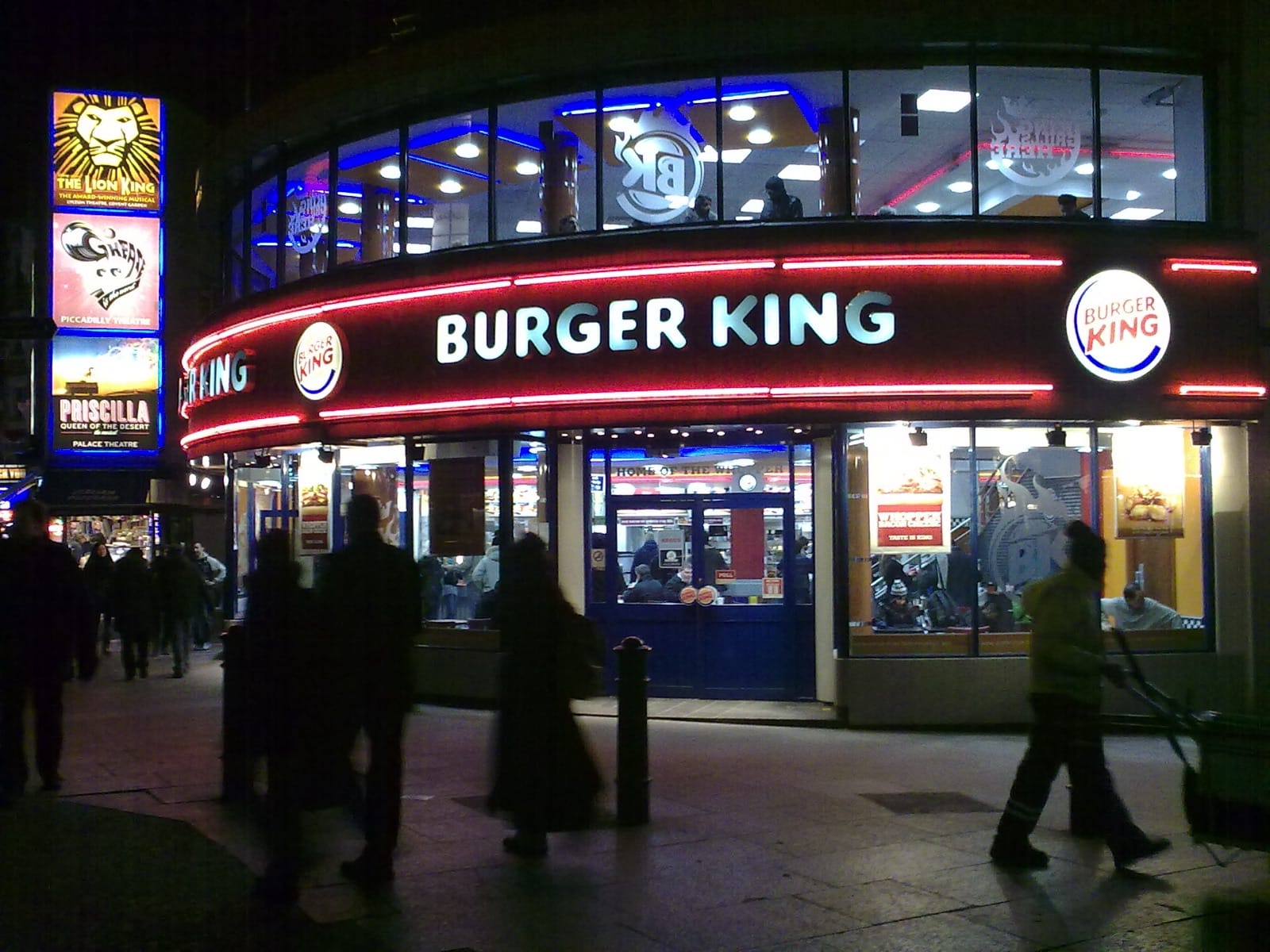
A British high street, half past six. The casual fast-food treat the majors were built to own is hollowing from both ends — cheap fuel on one side, cultural identity on the other. This is a panorama of who is winning British fast food, read through KFC, the only chicken specialist among the majors.
British fast food is being pulled apart into two categories that no longer compete with each other — and the brands built for the middle are stranded. At one pole sits fuel: the cheapest possible hot calories, an occasion stripped of ceremony, where Greggs has won precisely by refusing to be called fast food. At the other sits culture: fried chicken as identity and performance — the independent chicken shop, drill and grime, the globally exported “Chicken Shop Date” format — where unbranded operators with no marketing budget own the code outright. The middle — the casual family treat, the occasion McDonald's, KFC and Burger King were all built to own — is being hollowed from both ends at once: GLP-1GLP-1documentedA pharmaceutical class — semaglutide and tirzepatide, marketed as Wegovy, Ozempic and Mounjaro. Originally diabetes drugs, now widely used for weight loss. The relevant effect for QSR is appetite: GLP-1 users eat less, less often, and crave high-fat, high-calorie food markedly less. UK adoption has accelerated from private clinics toward wider and NHS-supported use, with structural implications for portion size and visit frequency across fast food.Pharmaceutical literature (Novo Nordisk, Eli Lilly clinical disclosures); UK press and NHS coverage of adoption. and the HFSS regime are shrinking the “treat” frame, the cost-of-living squeeze is collapsing the bottom into pure fuel, and cultural energy has migrated to operators the majors do not even track. KFC's exposure is the sharpest in the category. It owns “fried chicken” as a trademark and has lost “fried chicken” as a culture. It built branded fried chicken in Britain; the unbranded chicken shop now owns what fried chicken means.
- 01QSR growth should be concentrating at the two poles — value-led food-to-go and independent or challenger chicken — while the legacy burger-and-bucket majors hold or decline on like-for-like footfall, growing system sales mainly through price and delivery rather than visits.
- 02The independent chicken-shop count should be flat to growing in urban Britain even as branded QSR rationalises sites.
- 03Cultural and search volume around chicken-shop culture — Morley's, “Chicken Shop Date,” drill references — should outpace the cultural volume of any single branded QSR chain.
- 04If false, QSR growth would track straightforwardly with disposable income and footfall, with no structural divergence between the poles and the middle — the category would be cyclically soft, not structurally splitting.
The rest of this analysis tests the hypothesis. We find it confirmed.
The data foundation.
The numerical values in this section are placeholders that demonstrate the analytical output — not pulls from CGA by NIQ, MCA Insight, Kantar or Lumina. Production deployment wires live data from the buyer's existing subscriptions. The frameworks, structural reads, and directional claims hold; the specific magnitudes do not.
UK QSR system sales have grown across the period, but the growth is overwhelmingly price and delivery, not visits. Like-for-like footfall at the legacy burger-and-bucket majors has been flat to soft; real servings per head have fallen.
Food-to-go and bakery-led value — Greggs the clearest case — has structurally outperformed, taking share of the hungry hour without ever being framed as fast food.
The independent fried-chicken trade has held or grown its site count in urban Britain even as branded QSR rationalises estates and leans on delivery. The cultural end and the cheap end are both gaining — at the expense of the casual middle.
UK QSR delivery orders have risen roughly five-fold since 2018, while dine-in footfall never climbed back to its pre-2020 level. The category's system sales kept growing; the visit to the restaurant did not.
The people cutting back on fast food are not mainly doing it to save money. They are on weight-loss medication, counting macros, and frying chicken at home.
Use or have used a GLP-1 weight-loss medication
3.2×
Track calories or macros with an app
2.6×
Follow a high-protein way of eating
2.4×
Own and regularly use an air fryer
2.1×
Hold onto the air fryer and the GLP-1 line. They come back — hard — when we get to what is actually eating the category.
The UK QSR register, read.
This section reads the UK QSR category's dominant register, using KFC as the lens — the client's brand and the only chicken specialist among the majors. The structural openings here are category-level; KFC's specific exposure to each is called out where it sharpens the read. The wider competitive field is mapped in the Category Deep Dive.
Three structural openings the category has left unclaimed.
Three structural openings the UK QSR majors have collectively left unclaimed. KFC appears here as the brand with the deepest residual material to claim two of them.
Every QSR major has a founder. None of them lead with one. Harland Sanders is the most documented — a real biography of late and improbable success. Ray Kroc at McDonald's, James McLamore and David Edgerton at Burger King, the Greggs family in the North East — all real, all absent from the brand. The position is open to any of them; KFC has the deepest material to lead with.
Across the majors, the production reality sits backstage. KFC hand-breads the chicken in every restaurant and pressure-fries to a specific spec. McDonald's runs a proprietary fry pipeline. Greggs bakes fresh daily. Burger King flame-grills. None of them sells the craft as brand. The position “the chicken / the burger / the pastry is made, not assembled” is open across the category — and KFC has the strongest claim because the recipe is genuinely a documented secret.
The unbranded chicken shop is the most culturally generative food code in modern Britain — referenced constantly in drill and grime, the basis of the “Chicken Shop Date” interview series, a fixture of late-night high streets. The position “we are the original of what they do” is available to KFC alone — McDonald's and Burger King are not chicken brands; the independents cannot scale a brand. Whether KFC claims it is the most consequential open question in UK QSR.
Across UK QSR, the majors collectively under-claim their craft. The default register is the casual everyday treat — witty, value-led, light on heritage — and the production reality sits backstage. KFC's case is the sharpest: its UK marketing brilliantly owns the self-aware register (the 2018 “FCK” apology, the Michael Gravy era, the suspension and restoration of “It's Finger Lickin' Good”) but markets the chicken as fast food rather than as made. The hand-breading, the pressure-frying, the real recipe and the documented founder sit backstage.
The format, not just the brand.
Britain eats KFC in three formats, and the format — far more than the brand — determines the occasion, the cohort, and the ceiling. The same chicken behaves like three different businesses.
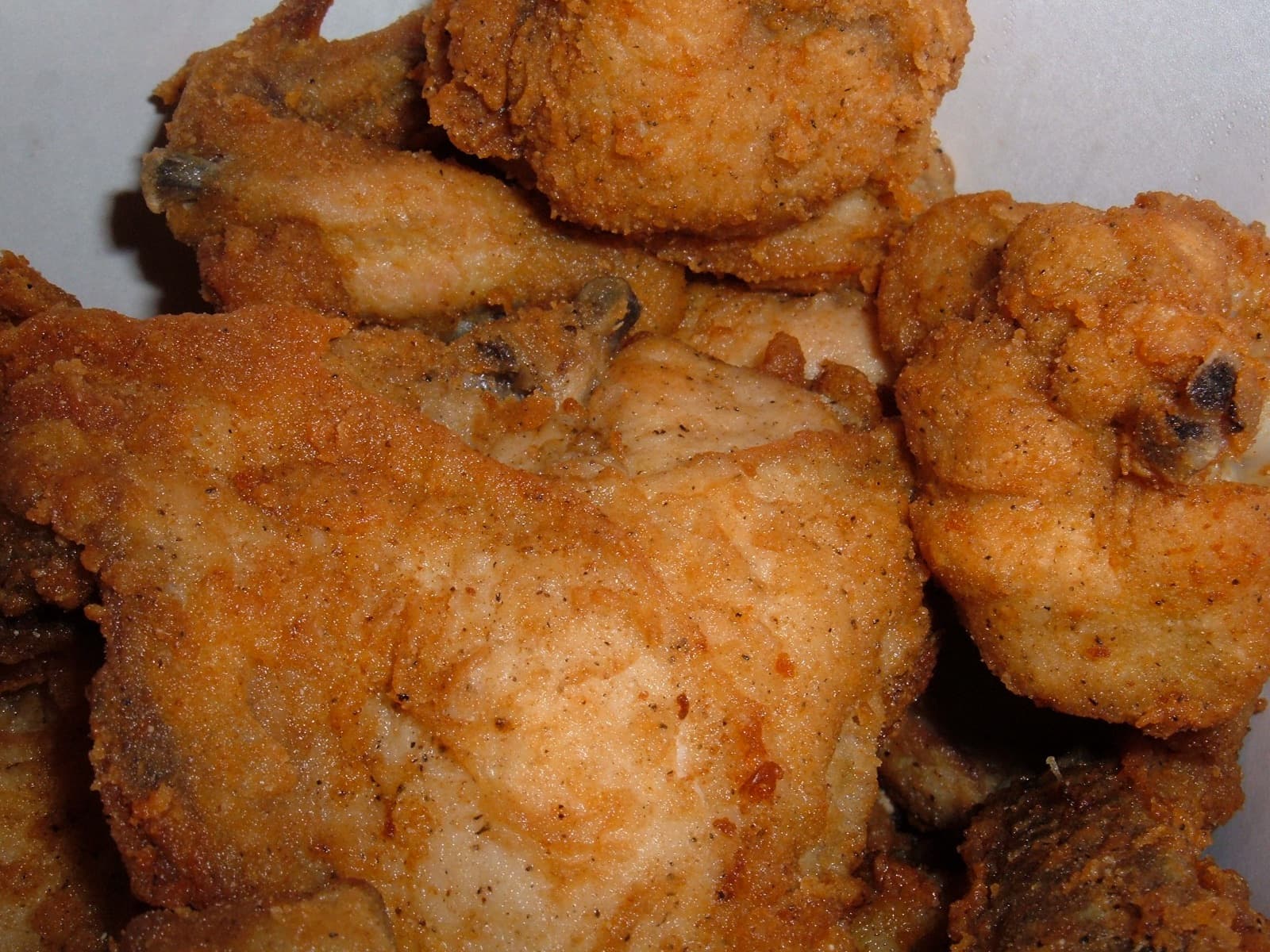
The bucket — the sharing format
Original Recipe, pressure-fried, hand-breaded. Bought to be shared — the family tea, the group order, the football.
A social-occasion format. It needs more than one person to make sense; a bucket eaten alone reads as excess, not as a treat.
Dine-in and home delivery; the family or group tea, the night the household eats together.
The bucket is KFC's heritage format and the one most exposed to the macro forces. GLP-1 and shrinking household appetite hit shareable volume first — when each sharer eats less, the bucket is the format that empties slowest and gets ordered least.
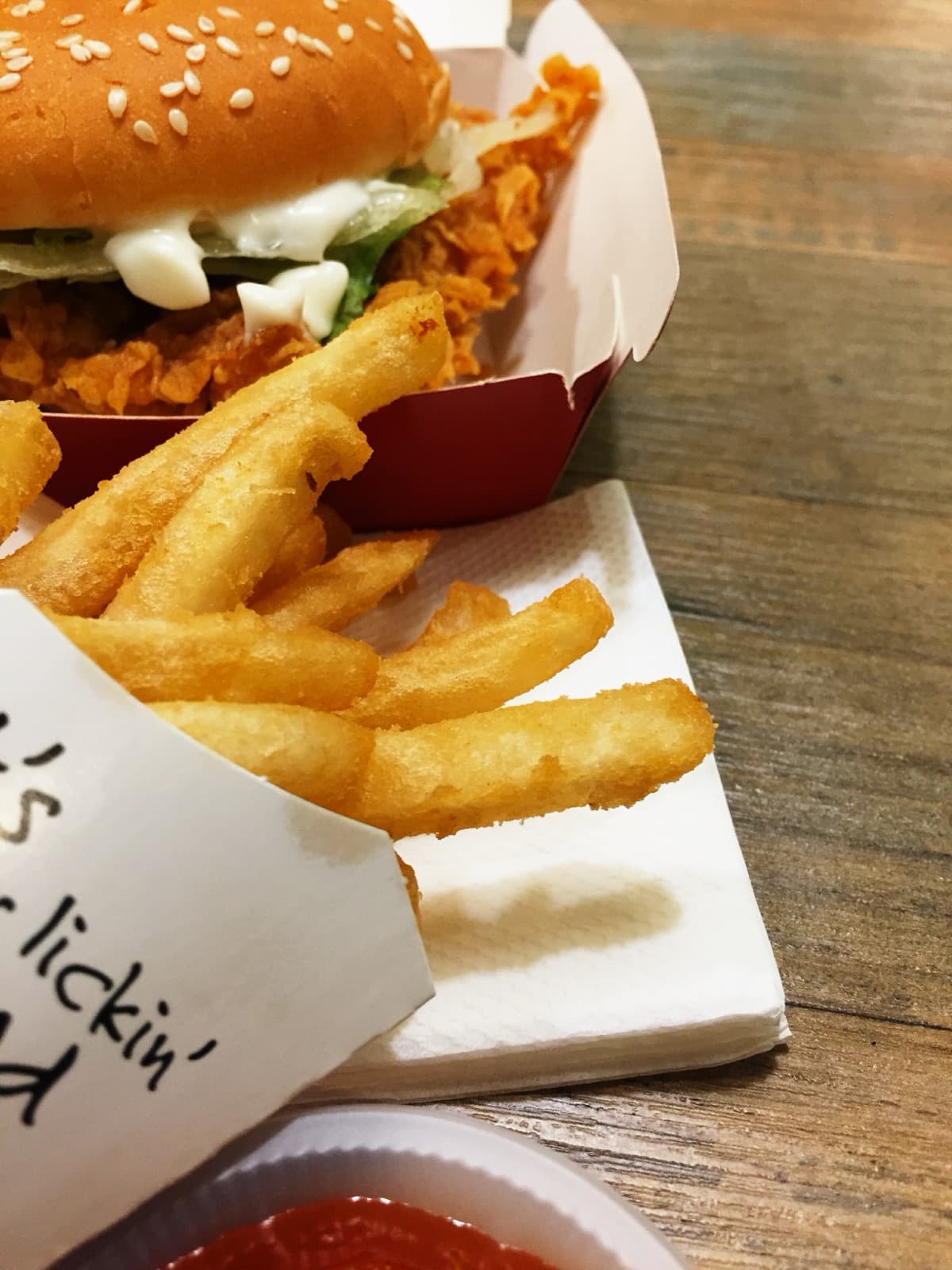
The Zinger and fillet burger — the everyday solo format
A breaded chicken fillet in a bun. The format that meets McDonald's McSpicy, every chicken-burger challenger, and the whole burger-QSR set head-on.
Solo, handheld, fast. The weekday-lunch and on-the-go occasion — meal-deal territory.
High-street lunch, transport hubs, the quick solo stop.
The most contested format KFC runs and the one with the least differentiation. In the chicken-burger boom, KFC's specialist heritage counts for almost nothing — here it is one fried-chicken sandwich among many, competing on price and speed.
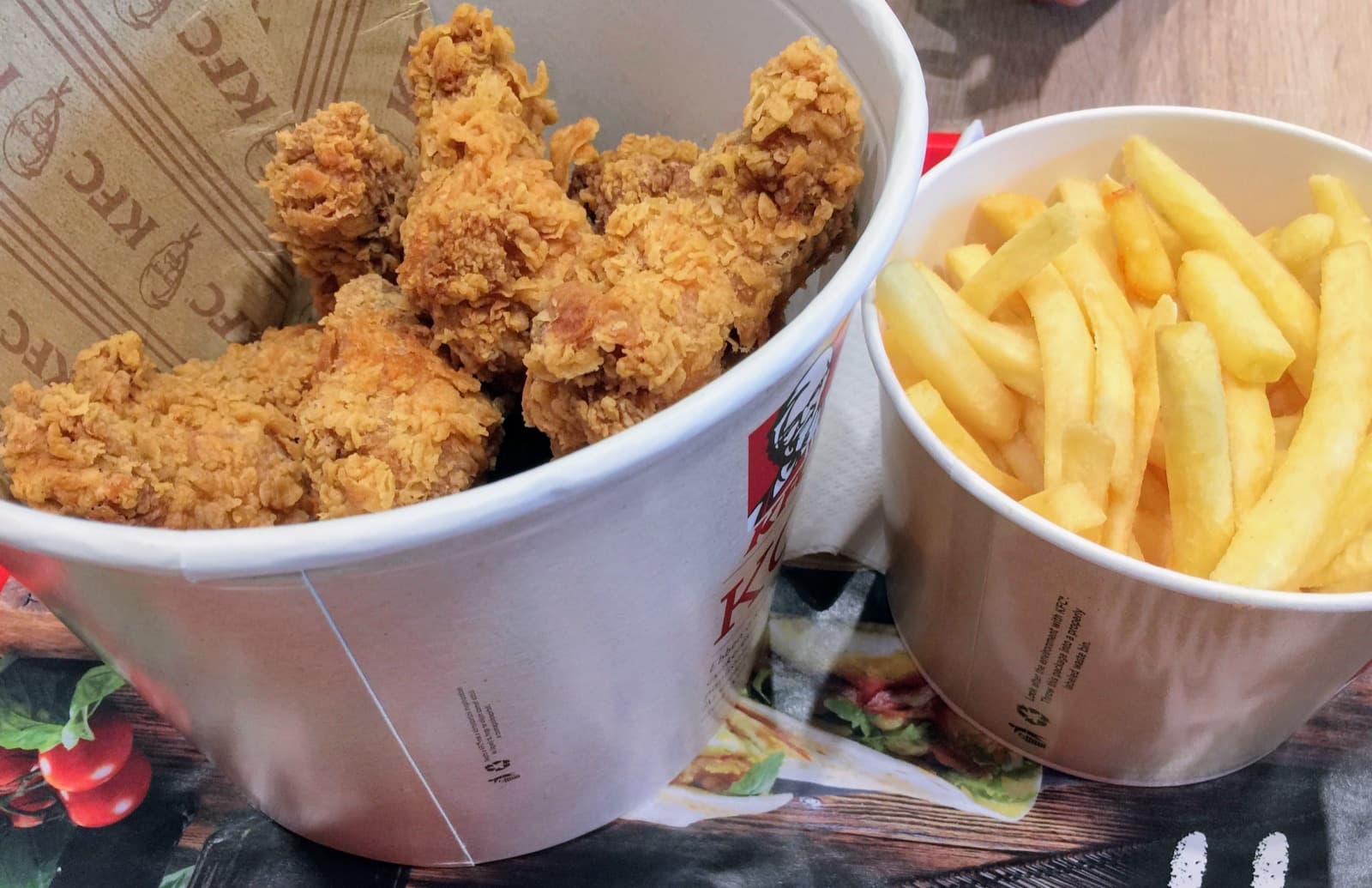
Boneless, popcorn and wings — the snacking and late-night format
Boneless bites, popcorn chicken, hot wings. Built for delivery and for the late-night, hand-to-mouth occasion.
Format-flexible — solo or shared, travels well, works cold-ish. The format that survives a delivery journey.
Delivery apps and the late-night high street — the exact occasion the independent chicken shop owns.
The format that puts KFC head-to-head with the independent chicken shop on its home turf — and, not coincidentally, the format most able to carry the residual chicken-shop register if KFC ever chose to claim it.
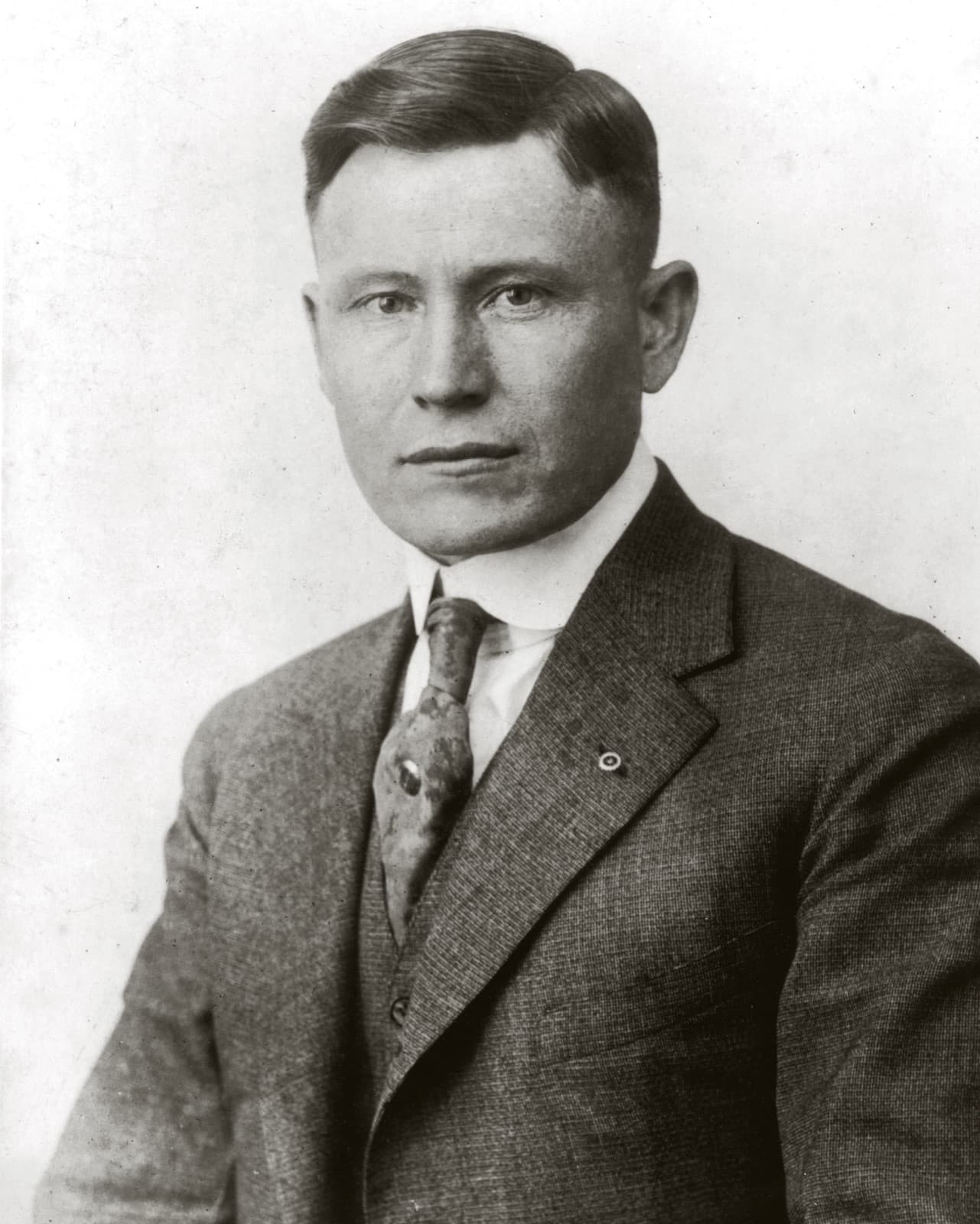
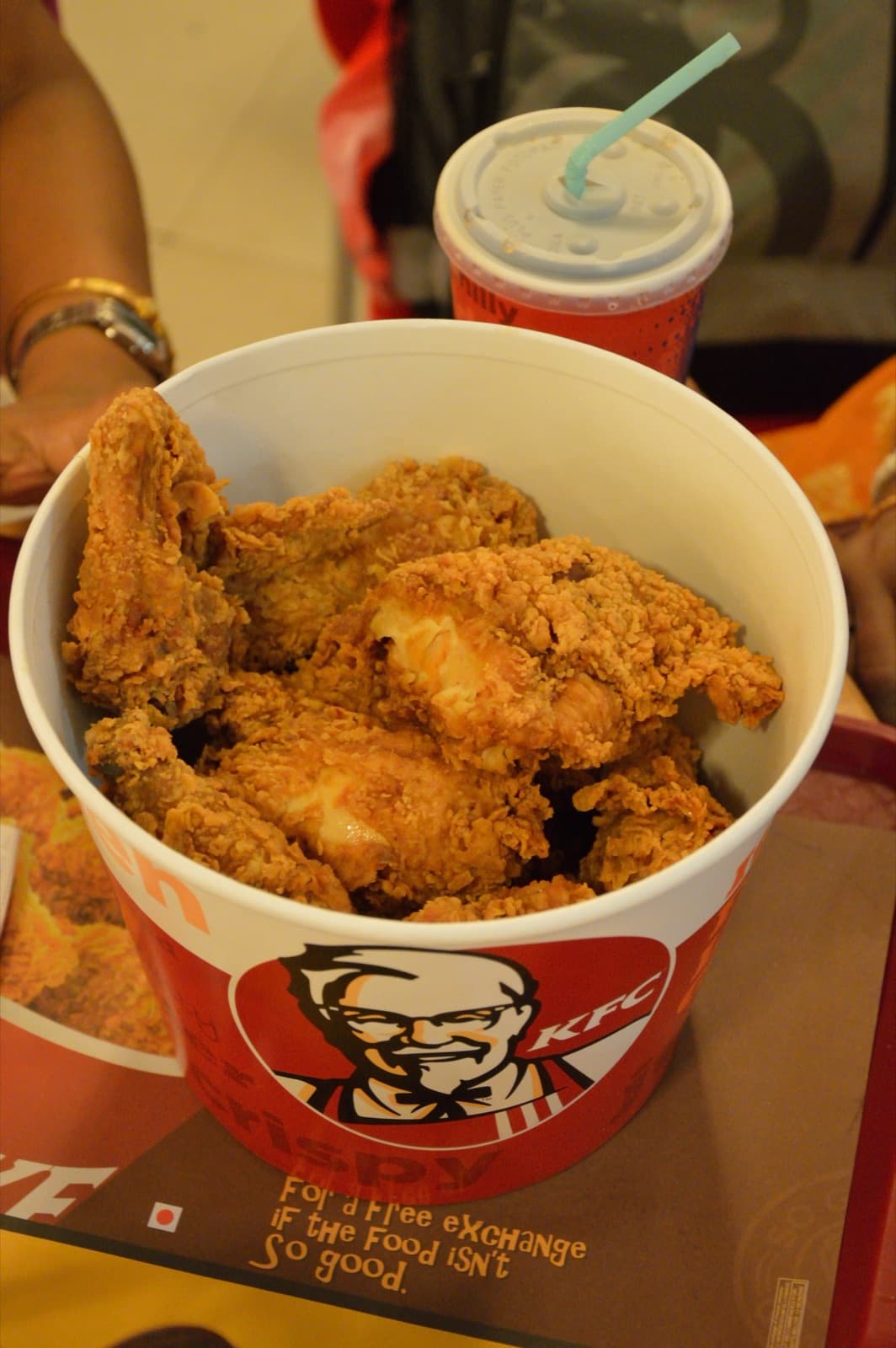
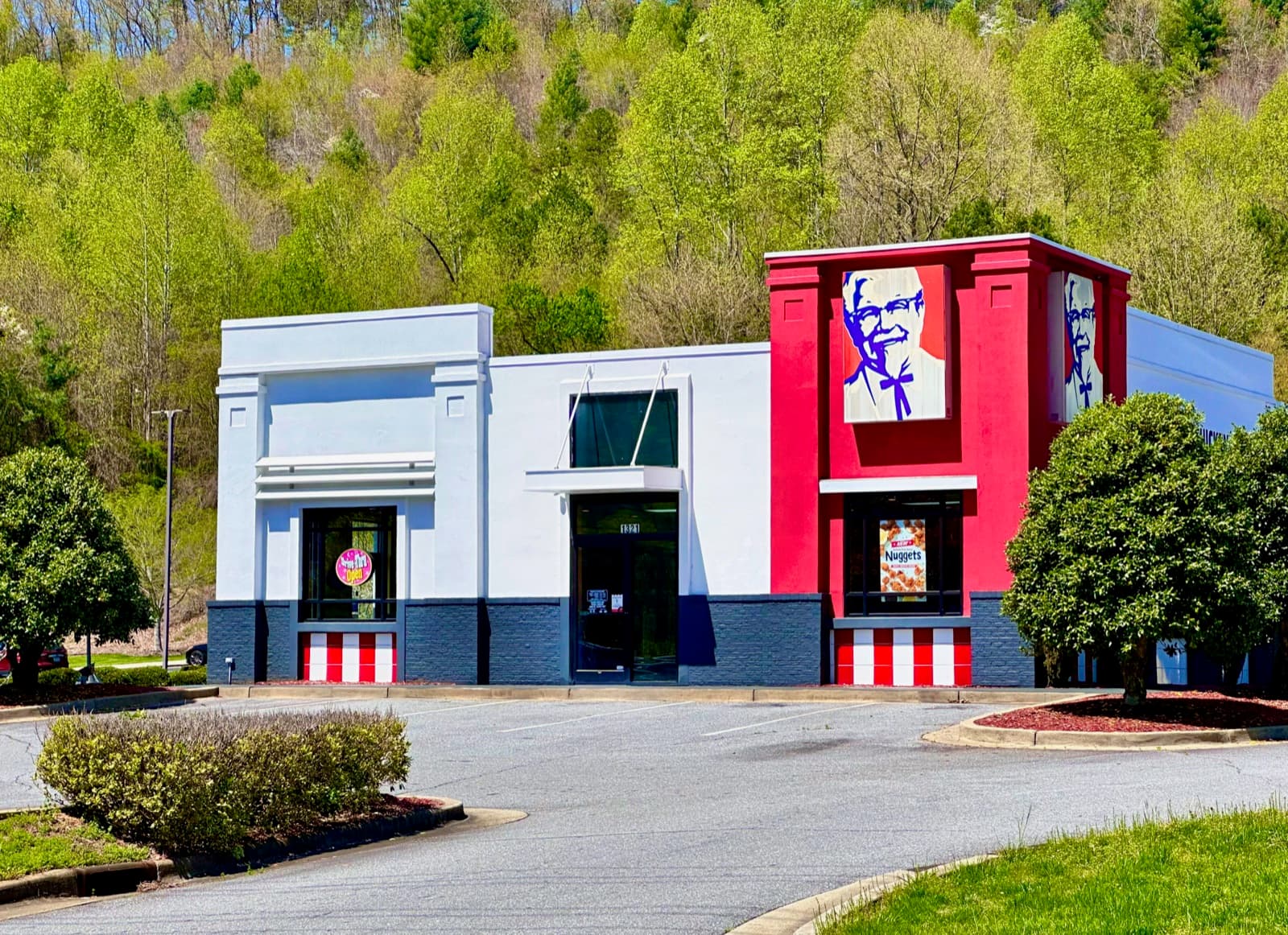
Real founder archive plus reference imagery for the registers KFC extends. Production version pulls live social capture and current campaign content.
What KFC is currently saying in market, captured from public campaigns and brand communications.
Production version pulls these from live Brandwatch, Meta and TikTok signal, and brand official channels, refreshed weekly.
Self-aware, irreverent wit
“The brand that is in on the joke — self-deprecating, fast, culturally fluent; the recipe and the Colonel played for laughs.”
The most awarded register in UK QSR and, by now, the most imitated. Brilliant at cultural relevance — but it sells the brand's personality, rarely its production truth. Wit without craft.
The Colonel as rotating mascot
“The Colonel deployed as a comic, recastable figure — a character, not a founder.”
The real biography — failure until 65, the trade-secret recipe, the hand-breading — is left dormant. The most distinctive founder story in QSR is used as a costume.
Says, offers, need.
Heritage and originality — “the original,” the Colonel, “It's Finger Lickin' Good” — carried in a self-aware, irreverent, very British wit. The register Mother built, and the register the rest of the category now imitates.
Not a meal. Permission to indulge without an occasion. KFC is the un-special treat — you do not need a birthday, a Friday, or a reason. It brackets a small pleasure off from the day's rules and hands it back without the apology.
The structural human need for a small, repeatable pleasure that does not have to be earned, scheduled, or justified. Every culture has had its cheap hot indulgence — Britain has the chippy, the chicken shop, the bag of chips eaten on the walk home. Modern health culture has moralised all of them. KFC sells the un-moralised version back: indulgence without the guilt tax.
Archetype position.
The Jester
Jungian — KFC UK's signature register
To play, to delight, to puncture its own pretension. The brand that is in on the joke before you are.
Triviality; wit as evasion — never saying anything that costs something, never being caught earnest.
The 2018 “FCK” chicken-shortage apology; “Michael Gravy”; the recipe treated as a running joke; suspending and restoring “Finger Lickin' Good.”
The Everyman
Jungian
To belong, to be unpretentious — the people's chicken. No occasion required, no airs.
Mediocrity; refusing to claim the excellence it has actually earned. Hiding real craft behind a shrug.
Price, ubiquity, the bucket built to share, the late-night occasion, the absence of ceremony.
The Cheeky Chancer
UK Tier 3 (region-canonical)
To be irreverent from below — the loveable working-class British rogue who makes a virtue of not being posh. Del Boy, Arthur Daley, the market-stall geezer.
Front as evasion — never being caught trying, never being caught caring.
KFC UK's irreverence is not the American corporate Jester's wink. It is class-coded British cheek — and it is the exact register the chicken shop and drill culture already run on. KFC shares an archetype with the independents it is losing to.
The category, seen from inside.
| Who | What they say | Position signal |
|---|---|---|
McDonald's | I'm lovin' it — value, convenience, the British everyday | Volume and footfall leader; owns the family-QSR middle and ordinary-Britain emotional realism |
KFC | The original — chicken, heritage, irreverent British wit | The only chicken specialist among the majors; culturally sharp, craft heritage badly under-claimed |
Burger King | You rule — the challenger troll | Challenger register now category noise; structurally the third burger brand |
Greggs | Food on the go, proper value, no airs | The structural winner — eats the category's occasion and money without ever being called fast food |
Independent chicken shops | (unbranded) — fast, cheap, late, local, yours | Own the cultural code of fried chicken outright; no marketing budget, total cultural fluency |
Nando's and “better chicken” challengers | Chicken with a personality — peri-peri, fresh, a bit mid | Own the social, mid-market chicken occasion KFC vacated reaching for burger-QSR respectability |
British fast food is being pulled apart into two categories that no longer compete with each other. At one pole, fuel: the cheapest hot calories, the meal deal and the Greggs counter, an occasion stripped of ceremony. At the other, culture: fried chicken as identity and performance — the chicken shop, drill, “Chicken Shop Date.” The unresolved tension is the middle. The casual family treat that the majors were all built to own is the middle — and the middle is being hollowed from both ends. The open question for the category: who, if anyone, holds the middle — or does the middle simply stop existing as a place a brand can stand?
The cultural ownership of fried chicken is, astonishingly, unclaimed by any branded operator at scale. The independents own the code but cannot scale a brand; KFC owns the brand but has ceded the code. KFC's residual assets — the Colonel as a documented founder, the real recipe, the hand-breading, the bucket — are a near-perfect match for the craft and realness the chicken-shop register runs on. KFC can move from the contested burger-adjacent middle into a residual-heritage register that is its alone, by claiming its own production and origin truth. McDonald's cannot follow — it is not a chicken brand. Burger King cannot follow. The independents cannot consolidate. The position is KFC's, and it is open.
Category context: what the other majors are saying in-market — included here to position KFC, not as the subject of this analysis.
The everyday, the value, the British institution
““I'm Lovin' It,” relentless value (the Saver Menu), and a quietly masterful register of British emotional realism — the Christmas films, “raise your arches.””
McDonald's owns the British family-QSR middle and the emotional realism of ordinary Britain. It is the incumbent the entire contested middle is organised around.
The challenger troll
“Anti-McDonald's wit, provocation and stunts — the Moldy Whopper, “Confusing Times,” “You Rule.””
A challenger register that has become category noise. Every QSR brand now trolls; the troll move no longer differentiates anyone, including the brand that pioneered it.
The macro forces pulling the category apart, and the QSR occasion under pressure.
Four forces operating outside the which-burger-chain competitive frame — none visible in within-category analysis.
GLP-1 adoption
Active and accelerating across the UK. Weight-loss injectables (Wegovy, Mounjaro) have moved from private clinics toward wider use, with NHS access expanding.
The HFSS regime and the junk-food ad ban
Active. Calorie labelling on menus has been mandatory since 2022; UK restrictions on advertising high-fat, salt and sugar food — a 9pm TV watershed and online limits — are coming into force.
The cost-of-living squeeze
Active. Years of food inflation and squeezed real incomes have reset what fast food means, and what it costs, for most British households.
Chicken-shop culture and the fakeaway
Active. Two cohort shifts at once — fried chicken as cultural identity (drill, grime, “Chicken Shop Date”), and the air-fryer “fakeaway” at home.
Four macro forces are jointly hollowing out the middle of British fast food — the casual family-treat occasion the majors were all built to own.
- 01GLP-1 adoption shrinks appetite, portion size and frequency — and the shareable bucket loses volume fastest.
- 02The HFSS regime removes the majors' ability to advertise their highest-volume products in their highest-reach slots.
- 03The cost-of-living squeeze splits the category into unaffordable treat and pure cheap fuel, collapsing the casual middle.
- 04Chicken-shop culture and the air-fryer fakeaway outflank the QSR occasion culturally and economically at once.
The competitive frame this opens is wider than burger-versus-bucket. The pressure is on the occasion itself — and the brands organised around the casual family treat are the most exposed of all. British fast food is not cyclically soft. It is structurally splitting.
The substitute eating the category sits on the kitchen counter.
The fast-food occasion has a new competitor, and it is not another chain. It is the air fryer — and behind it, an appetite that fires less often than it used to.
Cultural codes.
Saturated · Dominant · Emergent · Residual · Unclaimed
Saturated
Every brand uses these — they're noise.
 reference
The slow-motion glistening food beauty shot — the cheese pull, the sauce drip, the steam. Every QSR brand and every food creator runs it; it no longer signals anything specific to anyone.
Image provenance:Reference image: a fried-chicken plate at Mary Mac's Tea Room, Atlanta, USA. Illustrative of the food-beauty-shot cliché, not a UK QSR campaign asset.
 reference
The anti-rival wit, the stunt, the cheeky billboard. Once Burger King's genuine edge; now every QSR brand does it, and the troll move reads as category wallpaper rather than as anyone's distinct position.
Image provenance:Reference image: a Burger King Whopper. Illustrative of the challenger-troll register, not a documented campaign asset.
 reference
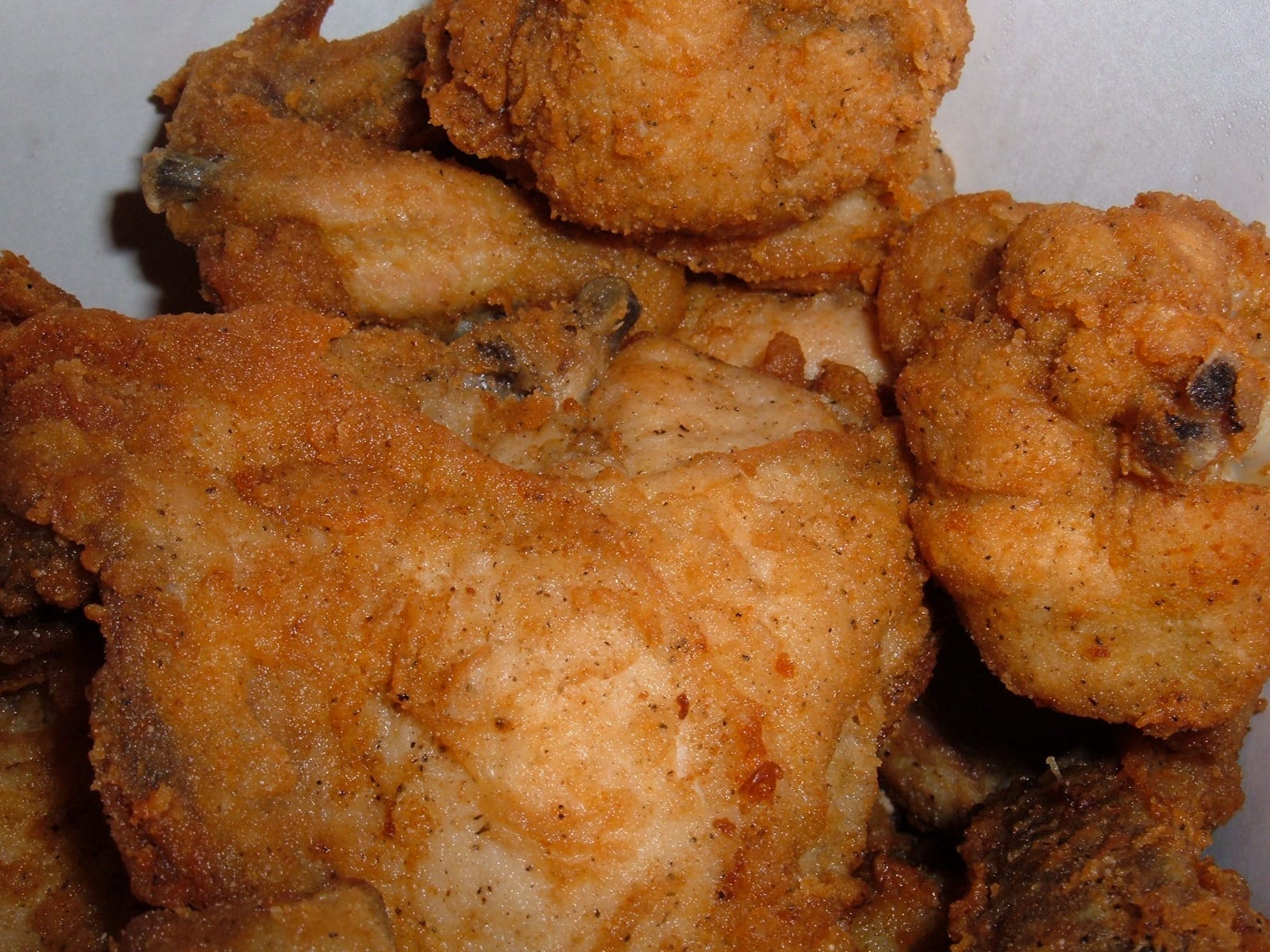
The to-camera “rating the fast food” video, the mukbang, the “is it worth it” verdict. Endemic to the category; reads as a content placeholder rather than as brand expression.
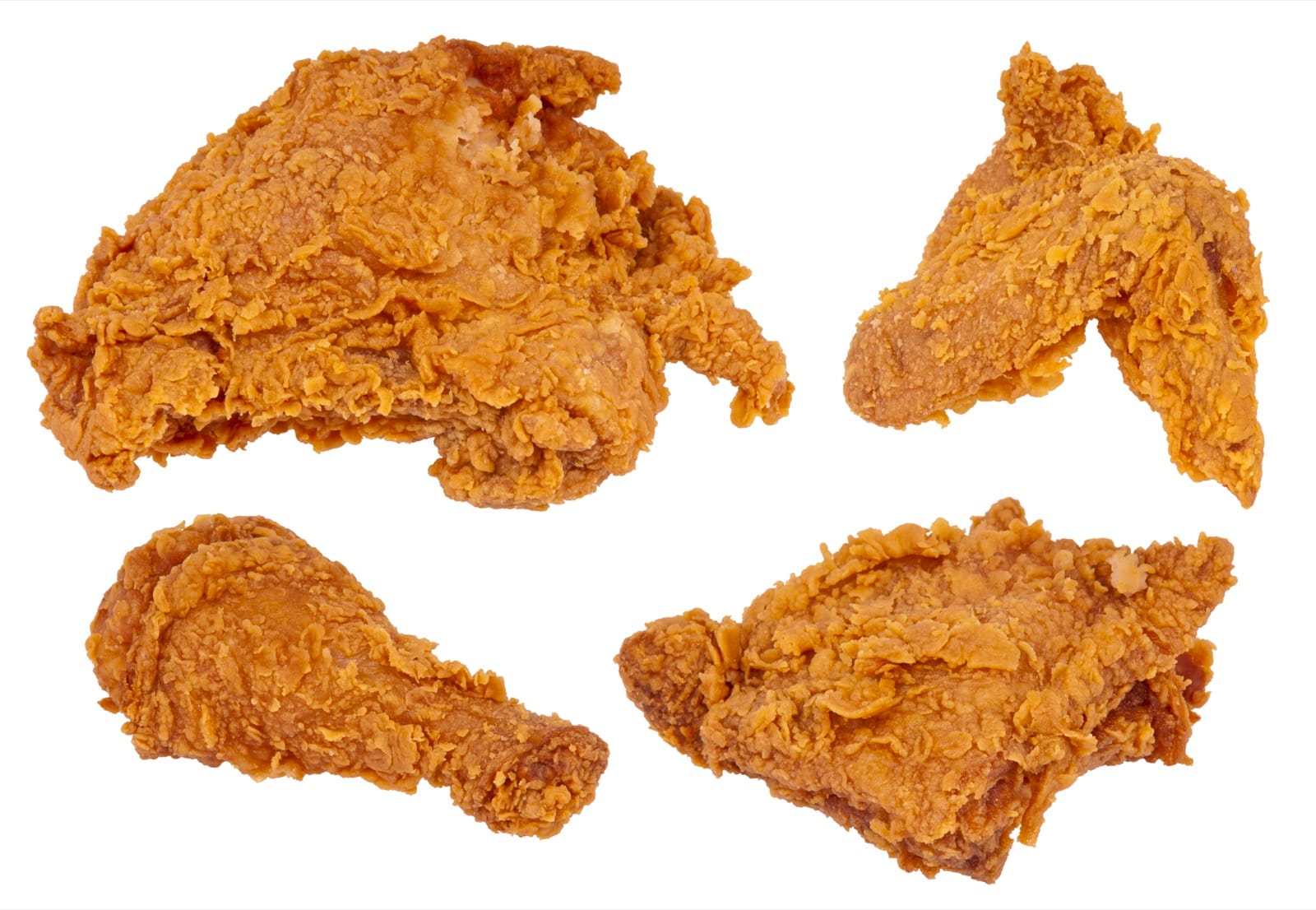
Image provenance:Reference image: a set of fried-chicken pieces. Illustrative of the review-content format, not a documented campaign asset.
Dominant
Strong but not yet exhausted. Currently high signal-to-noise.
 reference
The deal, the price, the meal-for-a-fixed-amount made the message rather than a footnote. High signal in a cost-of-living market; not yet exhausted, but it competes the brand down to a number.
Image provenance:Reference image: a McDonald's exterior in Freeport, Maine, USA. Illustrative of the value-QSR register, not a UK location. Production wires real UK estate imagery.
 reference
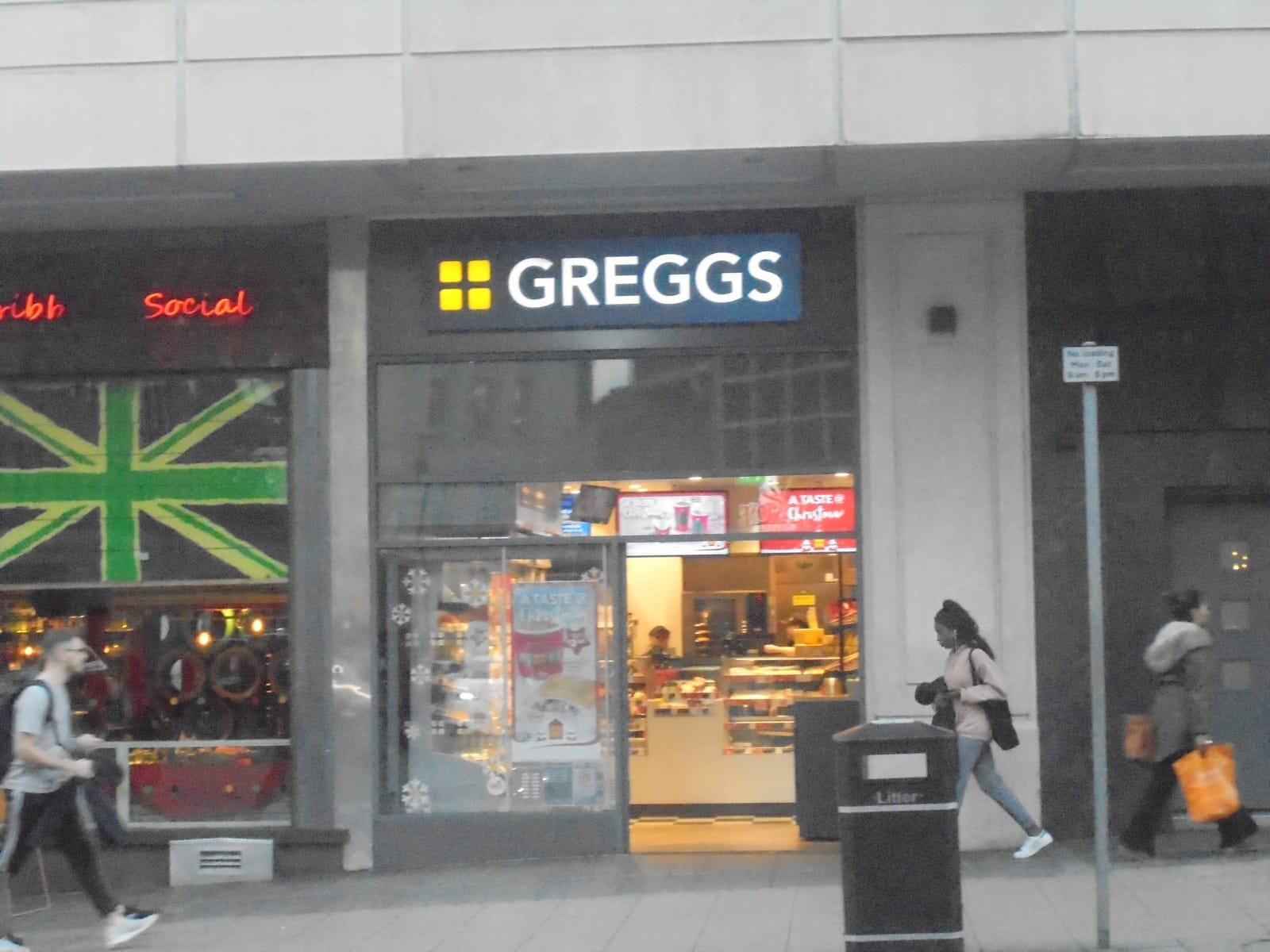
Real, un-glamorous British life observed with warmth — McDonald's UK's quiet mastery, and the register Greggs lives in by default. Strong, high-signal, and genuinely hard to copy because it cannot be faked.
Image provenance:Reference image: a Greggs shopfront in Brecon, Wales. A real UK location, used here to illustrate the ordinary-Britain register rather than as a documented campaign asset.
referenceThe in-on-the-joke wit KFC UK built and made famous. Still dominant, still working — but moving toward saturation as the whole category adopts it. The window in which it is distinctive is closing.
Image provenance:Reference image: KFC hot wings and fries. Illustrative of KFC's brand register, not a documented campaign asset.
Emergent
Forming, future-coded. 6–18 month forward window.
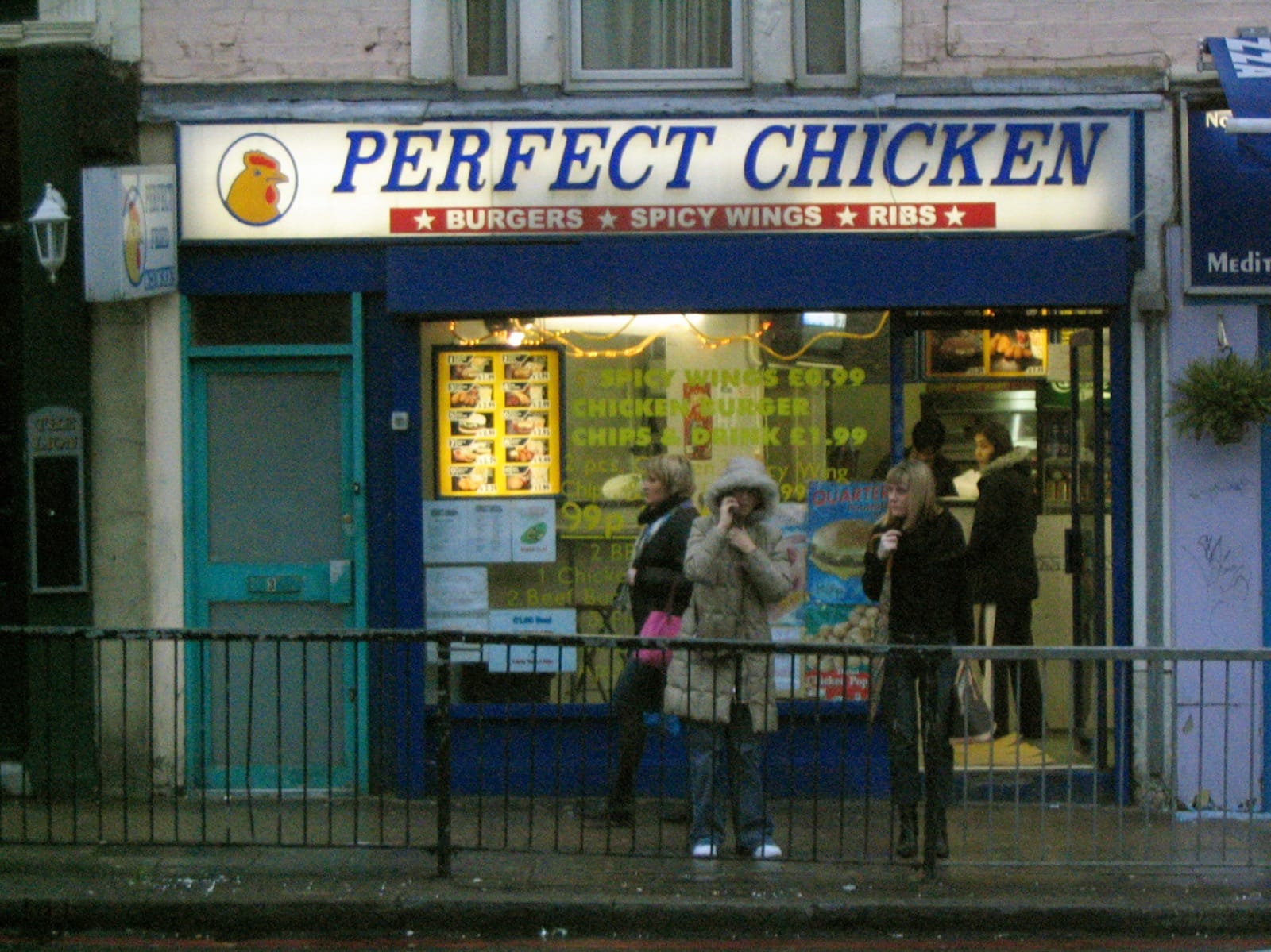
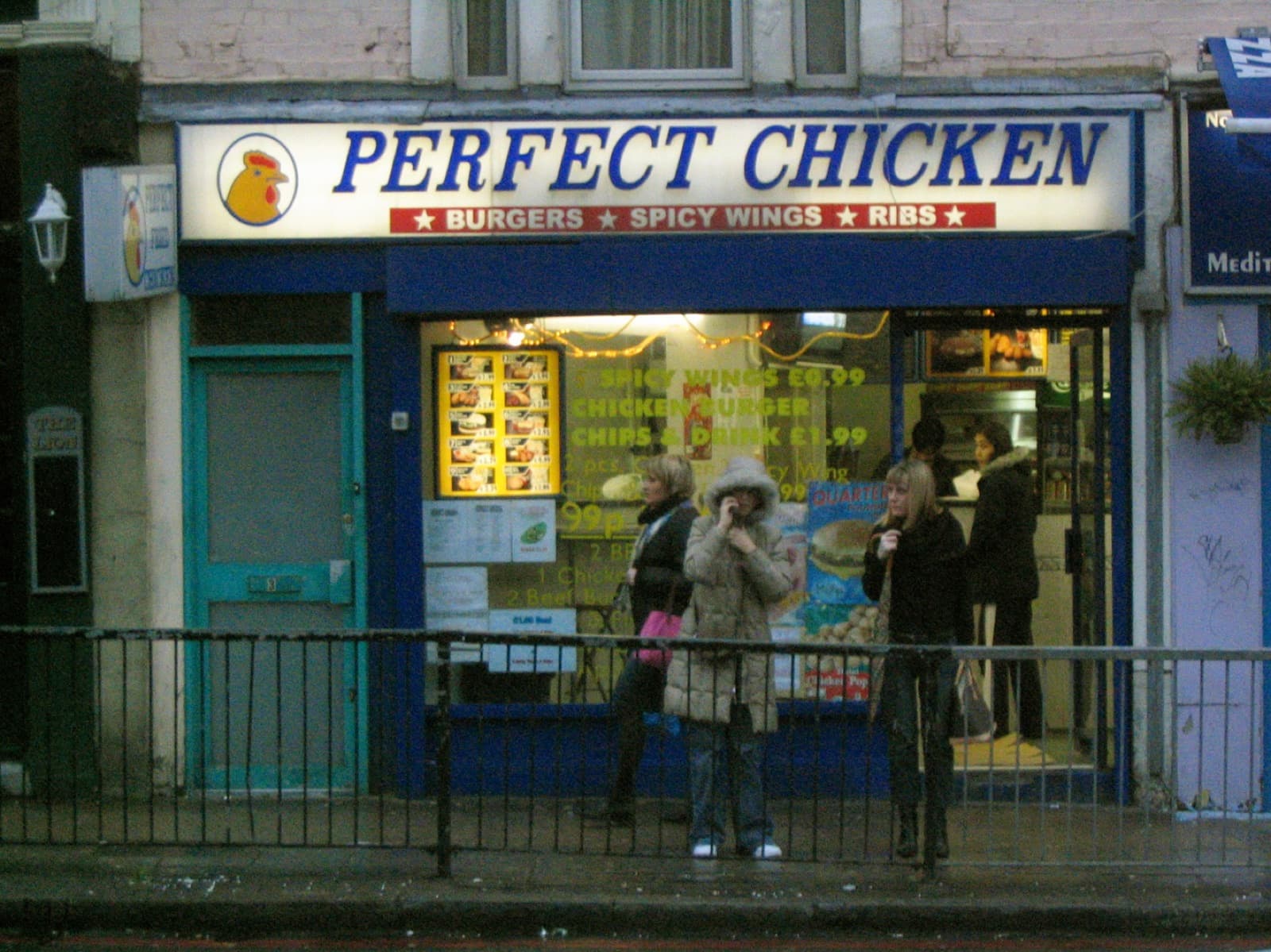
verifiedThe unbranded shopfront, the polystyrene box, the hand-written price, the night bus. Constantly referenced in drill and grime; “Chicken Shop Date” has exported the code worldwide. Future-coded, rising fast, and branded QSR is almost entirely absent from it.
Image provenance:Perfect Chicken, Archway, north London. A real, documented UK independent chicken shop — the actual subject of the code, not a proxy.
 verified
Halal not as a compliance footnote but as a mainstream British food code spoken in the open. The independent chicken trade is overwhelmingly halal; KFC runs a substantial halal estate. The code is real and growing, and no major brand speaks it confidently.
Image provenance:USA Fried Chicken, Bristol. A real, documented UK independent chicken shop — illustrative of the independent halal-coded chicken trade.
 reference
The brand confident enough to meet the air fryer instead of pretending it does not exist — “make it at home, here's how” as a brand behaviour. Emergent, counter-intuitive, and currently unoccupied.
Image provenance:Reference image: chicken being deep-fried. Illustrative of the home-cooking / fakeaway register, not a documented campaign asset.
Residual
Recoverable from past — KFC's own.
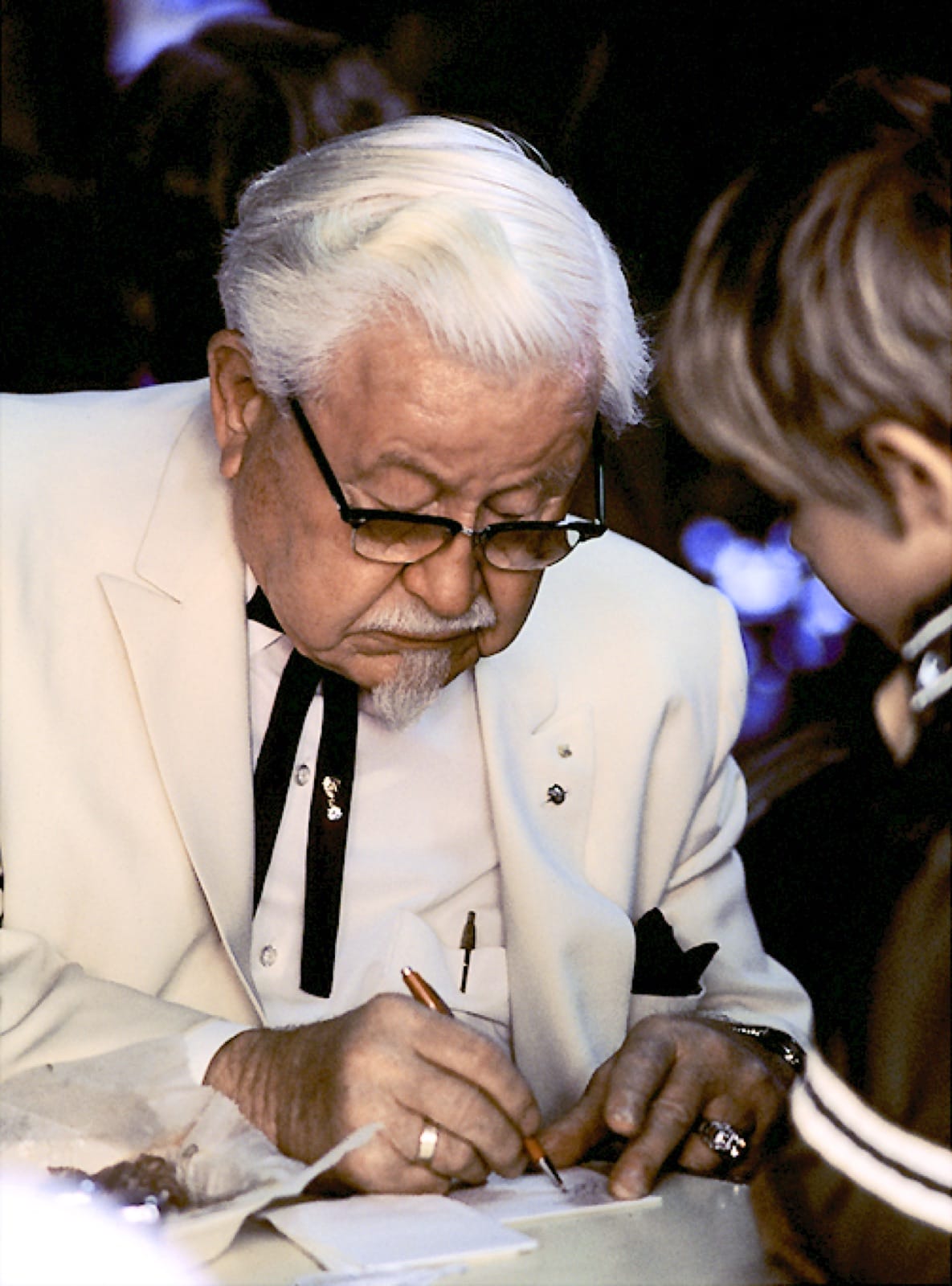
verifiedNot a mascot — a biography. Harland Sanders: a string of failed careers, franchising his recipe at 65, a real story of late and improbable success. Currently played entirely for laughs.
Image provenance:Harland Sanders, circa 1914. Wikimedia Commons, public domain. A verified real archival photograph of the founder — the actual artifact, not a proxy.
referenceThe production truth: eleven herbs and spices, a genuine trade secret, pressure-fried, breaded by hand in every restaurant every day. Real craft, treated as backstage operations.
Image provenance:Reference image: pressure-fried KFC chicken. Illustrative of the hand-breading and pressure-frying craft, not a documented kitchen asset.
referenceThe 1957 sharing bucket — a piece of industrial design as instantly legible as any logo in fast food. Currently treated as packaging rather than as the icon it is.
Image provenance:Reference image: KFC Original Recipe chicken in the bucket. A real product, used to illustrate the bucket-as-icon code rather than as a campaign asset.
Unclaimed
Culturally available — no brand has occupied yet.
KFC stating, openly and without class flinch, that it is the original of the form the independents perfected — the same occasion, the same chicken, the same late-night Britain, but with a real recipe and real craft behind it.
Fast food that openly designs for the GLP-1, calorie-aware, smaller-portion customer — right-sized formats, protein-forward, no shame and no diet-brand euphemism.
Halal QSR spoken in the open as ordinary British food — not a separate menu, not a quiet operational accommodation, but a confident, mainstream cultural position.
QSR rooted in a specific city or regional British identity rather than a placeless national sameness — the way Greggs is unmistakably, and profitably, of the North East.
A brand confident enough to help you make a version at home and survive doing it — co-opting the air fryer as an act of brand affinity rather than treating home cooking purely as a threat.
Where KFC is now, and where the assets suggest it's heading.
KFC owns “fried chicken” as a brand and has lost “fried chicken” as a culture. It built branded fried chicken in Britain; the unbranded chicken shop now owns its meaning, and the cultural conversation — drill, “Chicken Shop Date,” Morley's — runs entirely without it. Meanwhile the macro forces are hollowing out the burger-adjacent middle KFC has quietly been competing in. The next 18–30 months decide whether KFC reclaims the chicken-shop code from its own residual heritage, or remains the heritage incumbent of a category whose culture it no longer controls.
Strong on dominant codes — the self-aware irreverent register KFC UK built is the most awarded in the category and now widely copied. Weak on the emergent codes — the chicken-shop aesthetic, halal-forward, the fakeaway — which the independents own and KFC is absent from. Badly under-deployed on residual heritage: the Colonel as a documented founder, the real recipe, the hand-breading, the bucket. KFC holds a chicken birthright no major competitor can replicate, and currently markets around it rather than from it.
Two paths KFC might take, given current marketing direction and available heritage assets.
Stay in the irreverent, burger-adjacent middle
KFC continues its current marketing — brilliant, awarded, self-aware wit — competing in the contested middle on personality and value. The residual craft heritage stays dormant; the chicken-shop code stays with the independents.
Continued cultural sharpness and a full award shelf, but the category's middle keeps hollowing. KFC defends share on price and delivery while the cultural ownership of fried chicken stays elsewhere. Being the wittiest brand in a shrinking middle is still being in a shrinking middle.
Default trajectory. Most consistent with KFC UK's recent, highly successful marketing direction — and the easiest internal sell precisely because it is working on its own terms.
Reactivate the craft heritage and claim the original-chicken-shop code
KFC stops being embarrassed about its chicken-shop-ness. It reactivates the residual register — the Colonel as a real founder, the recipe, the hand-breading, the bucket — and uses that craft truth to claim, openly, that it is the original of the form the independents perfected.
A defensible cultural position no major can follow. KFC moves from competing in the middle to owning a pole. The signalling event would be visible — craft-and-origin-led work, the production truth foregrounded, the class flinch dropped — within 18 months.
Lower probability than Trajectory 1, higher strategic upside. Requires KFC and its agency to decide that class confidence, not class flinch, is the brief.
Hanging in the balance — not yet decided.
- Q1
Will KFC claim the chicken-shop code from its own heritage, or leave it permanently to the independents and the culture that has grown around them?
- Q2
How fast does GLP-1 adoption move from a private-clinic phenomenon to a mass-market reset of British appetite — and is the category designing for it or denying it?
- Q3
Does the HFSS advertising regime weaken the majors enough that un-advertised independents gain structural share?
- Q4
Does Greggs keep widening its definition of itself until it is, functionally, the UK's largest fast-food brand without ever once being called one?
Observable signals that would resolve the open questions.
- 01
Craft-and-origin signals from KFC: any work that foregrounds hand-breading, the recipe, or the Colonel as a documented founder rather than a mascot.
- 02
KFC menu and format moves toward the smaller appetite — right-sized formats, protein-forward propositions — as a read on whether the category is designing for GLP-1.
- 03
Greggs category-stretch: hot food, evening trading, delivery — each step is Greggs taking more of the QSR occasion.
- 04
Independent chicken-shop site counts, and the cultural volume around chicken-shop culture relative to branded QSR.
- 05
Halal moving from operational footnote to stated brand position by any major player.
Implications for KFC's own brief and roadmap are not in scope here. The panorama surfaces what KFC is doing and what's likely next; the strategic response is the agency's to define.
Confidence in the deliverable.
Suitable for an internal agency strategy session and for client-facing presentation with explicit strategist sign-off on the read. The structural-substitute claims — the air-fryer fakeaway and the GLP-1-erased occasion as genuine QSR competitors — would benefit from UK primary research validation before being committed to client-side decision-making.
The thinkers and data behind this read.
- Bourdieu, Distinction (1979) — taste as class signalling; the symbolic-capital frame underneath the treat / fuel split
- Williams, Marxism and Literature (1977) — dominant/residual/emergent state model
- Mauss, The Gift (1925) — the sharing-format and conviviality analysis
- Mary Douglas, “Deciphering a Meal” (1972) — food as a structured cultural code
- Schwartz, Universals in the Content and Structure of Values (1992) — cross-cultural need organization
- Sutherland, Alchemy (2019); Epstein, Range (2019) — second-order discipline
- Richard Hoggart, The Uses of Literacy (1957) — working-class British culture and its food
- George Orwell, The Road to Wigan Pier (1937); “In Defence of English Cooking” (1945)
- Owen Jones, Chavs: The Demonization of the Working Class (2011) — class representation in modern Britain
- Paul Gilroy, There Ain't No Black in the Union Jack (1987) — multicultural Britain
- Panikos Panayi, Spicing Up Britain (2008) — the migrant inheritance of British eating
- CGA by NIQ (UK eating-and-drinking-out market and outlet data)
- MCA Insight (UK QSR and delivery tracking)
- Kantar Out-of-Home and Lumina Intelligence (food-to-go and cohort behaviour)
- Company filings (Yum! Brands, McDonald's Corp, Restaurant Brands International, Greggs plc)
- ONS, Food Standards Agency, Google Trends and social listening (regulatory and cultural signal)
Honest sourcing note. The numerical data shown in this prototype (chart values, cohort multipliers, specific percentages) is illustrative — placeholder shapes that show what the analytical output looks like. It is NOT pulled from CGA by NIQ, MCA Insight, Kantar, Lumina, or any other named source. Production deployment wires the buyer's existing live data subscriptions; the framework was built to receive those feeds. The qualitative analysis — frameworks, region engine, cultural codes, brand reads, format-structural claims — is the actual analytical work and stands on its cited canonical sources.
The concepts behind this read.
Every term carries an explicit epistemic status. The reader can see whether a claim rests on a peer-reviewed academic concept, a documented real-world phenomenon, an observable cultural pattern that the analyst has named, or this analysis's own synthesis. Mixing these without distinction is what bleeds credibility — so we mark them.
Every glossary entry is tagged. Read the tag before you read the definition.
- canonicalCanonical — peer-reviewed academic concept with traceable lineage.
- documentedDocumented — real phenomenon covered in reputable journalism, cultural criticism, or industry data.
- observedObserved — visible cultural pattern that this analysis names but that lacks formal academic framing yet. Marked as observation, not theory.
- inferentialInferential — this analysis's own synthesis built on canonical, documented, or observed inputs.
- Williams' state model canonical
- Five states a cultural code can occupy: Saturated (everyone uses it, it's now noise), Dominant (still strong, not yet exhausted), Emergent (forming, future-coded), Residual (recoverable from past, often the brand's own heritage), Unclaimed (culturally available, no brand has occupied). The framework lets us read where a brand is now and where it can move.Raymond Williams, Marxism and Literature (1977)
- QSR documented
- Quick Service Restaurant — the industry term for fast food: counter-service or drive-through, fast, standardised, low-to-mid price. In the UK the branded QSR majors are McDonald's, KFC, Burger King, Subway, Greggs and the pizza-delivery chains; the term also, increasingly awkwardly, has to account for the independent takeaway trade that operates the same occasion without the branding.Industry-standard term, used across CGA, MCA Insight and company reporting.
- the treat / fuel split inferential
- This analysis's name for the bifurcation pulling UK QSR apart. At one pole, fast food as fuel — the cheapest possible hot calories, an occasion stripped of ceremony. At the other, fast food as treat — indulgence, identity, a thing chosen rather than merely needed. The macro forces are pushing customers toward one pole or the other and hollowing out the casual middle where the family-treat occasion used to sit.Why this matters: The constituent facts (cost-of-living pressure, value food-to-go outperformance, GLP-1, the HFSS regime) are documented. The framing of them as a single bifurcation — the treat / fuel split — is this analysis's own synthesis.This analysis's synthesis, built on Bourdieu's account of taste and class and on documented UK QSR market data.
- the chicken shop documented
- The British independent fried-chicken takeaway — typically unbranded or locally branded, late-opening, cheap, found on nearly every urban high street and overwhelmingly halal. Beyond the food, it is a genuine cultural institution: a recurring setting and reference point in grime and drill, a fixture of British youth and working-class life, and the origin of the “Chicken Shop Date” format. The chicken shop is the most culturally generative food code in modern Britain — and it belongs to no brand.Widely documented in British music, journalism and screen — from grime and drill lyrics to the “Chicken Shop Date” series and extensive press coverage of shops such as Morley's.
- Chicken Shop Date documented
- A celebrity-interview series, created by Amelia Dimoldenberg, filmed in British fried-chicken shops, that grew from a youth-press column into a globally recognised format with red-carpet spin-offs. Cited here as evidence of how far the cultural ownership of fried chicken has travelled from the branded QSR majors — the format is built entirely on the chicken shop as cultural code, with no branded chain involved.Documented media phenomenon; the series and its reach are extensively covered in UK and international press.
- the HFSS regime documented
- The UK regulatory framework restricting food that is High in Fat, Salt or Sugar. It includes mandatory calorie labelling on large operators' menus (in force since 2022) and restrictions on advertising HFSS products — a 9pm television watershed and limits on paid online advertising. For QSR it removes the ability to advertise the highest-volume products in the highest-reach slots, and reframes every menu as a document the customer reads in calories.Why this matters: The policy direction is firmly documented; specific enforcement dates have moved more than once and remain a moving target.UK Government / Department of Health and Social Care policy; Food Standards Agency. Enforcement timing has shifted across announcements.
- GLP-1 documented
- A pharmaceutical class — semaglutide and tirzepatide, marketed as Wegovy, Ozempic and Mounjaro. Originally diabetes drugs, now widely used for weight loss. The relevant effect for QSR is appetite: GLP-1 users eat less, less often, and crave high-fat, high-calorie food markedly less. UK adoption has accelerated from private clinics toward wider and NHS-supported use, with structural implications for portion size and visit frequency across fast food.Pharmaceutical literature (Novo Nordisk, Eli Lilly clinical disclosures); UK press and NHS coverage of adoption.
- the fakeaway documented
- A home-cooked version of a takeaway meal — the word itself a documented part of British food vocabulary. The fakeaway has been supercharged by the air fryer, now in roughly half of UK households, which makes a credible fried-chicken substitute cheap, fast and low-effort at home. The fakeaway is a structural substitute for the QSR occasion that does not appear in any within-category competitive analysis.Documented term in UK food media and retailer marketing; air-fryer ownership tracked in UK consumer and retail reporting.
- food-to-go documented
- The UK trade term for the on-the-move eating market — sandwiches, bakery items, hot snacks, meal deals, coffee-shop food — sold for immediate consumption. It overlaps heavily with QSR's occasion and budget without being classified as fast food. Greggs is the defining food-to-go operator and the clearest case of the category eating QSR's lunch, literally, while being filed under a different heading.UK trade term; tracked by Lumina Intelligence, Kantar and others.
- the meal deal documented
- The British supermarket and convenience-store lunch bundle — a main, a snack and a drink for a single fixed price. A national institution and a structural competitor to QSR for the weekday-lunch occasion, especially under cost-of-living pressure. Its long-fixed headline price made meal-deal inflation a genuine news story — a measure of how load-bearing it is in British eating.Documented UK retail format; meal-deal pricing widely covered in UK consumer press.
- the Cheeky Chancer observed
- A British cultural archetype: the loveable working-class rogue who survives on charm, front and quick wit rather than status or capital. The spiv, Del Boy, Arthur Daley, the market-stall geezer. Distinct from the American Jester (whose irreverence is entertainment) and from the cross-cultural Trickster (whose rule-breaking is structural) — the Cheeky Chancer's irreverence is specifically class-coded, an irreverence from below. It is the register the chicken shop, drill culture, and KFC UK's own advertising all run on.Why this matters: Not a peer-reviewed archetype. Named here as a region-canonical cultural observation, evidenced by documented figures in British screen and class writing, in the same role the Brazil engine gives DaMatta's malandro.Grounded in British cultural history and class criticism — the figure of the spiv, the postwar sitcom tradition (Only Fools and Horses, Minder), and class-representation work by Richard Hoggart and Owen Jones.
- Colonel Harland Sanders documented
- The real founder of KFC (1890–1980). Not an invented mascot: a documented biography of repeated failure across many trades, who developed his fried-chicken recipe at a roadside service station in Kentucky and began franchising it in earnest in his sixties. The “Colonel” title was an honorary Kentucky Colonel commission. The distinction matters for this analysis — KFC has one of the few QSR founder-icons that is a true story, and it currently uses it as a costume.Documented biography; widely covered in business history and KFC corporate heritage material.
- halal in Britain documented
- Halal — food permissible under Islamic law — is, in the UK, both a religious requirement for a large and growing population and an increasingly mainstream feature of the high street, especially in the independent chicken trade, which is overwhelmingly halal. KFC operates a substantial halal-certified estate. The point for this analysis: halal is a real, scaled British food code, and branded QSR treats it as quiet operational compliance rather than as a confident, stated cultural position.Documented in UK census religion data, halal-market reporting, and coverage of QSR halal estates.
- Schwartz universal needs canonical
- A cross-cultural taxonomy of the structural needs every culture organizes itself around. Used here to identify what a brand offers at the deepest layer — KFC is not selling chicken, it is selling Permission to Indulge (need 10.1), the sanctioned small pleasure that does not have to be earned or justified.Why this matters: The taxonomy is canonical; the specific labelling “Permission to Indulge / 10.1” is this analysis's interpretive overlay on Schwartz's structure.Shalom Schwartz, “Universals in the Content and Structure of Values” (1992); subsequent revisions in Schwartz et al. 2012.
- the caff documented
- The British greasy-spoon café — the working-class institution of the cheap cooked meal, the fry-up, the mug of tea. The caff is to British eating roughly what the boteco is to Brazil or the izakaya to Japan: the residual, class-rooted site of the unceremonious hot meal. Largely displaced by branded QSR and food-to-go over recent decades, it is the residual British eating culture that the chicken shop, in its own way, inherited.Documented British cultural fact, covered extensively in food writing and social history.
- dark kitchen / virtual brand documented
- A dark kitchen (or ghost kitchen) is a delivery-only food-production site with no dine-in presence; a virtual brand is a delivery-app-only brand, often run out of an existing kitchen, that exists only as a listing. Both are products of the delivery-aggregator era and both restructure QSR economics — a brand can now exist purely as an image on a Just Eat or Deliveroo screen, with no high street and no estate.Documented industry development; covered in UK hospitality and delivery-platform reporting.
- Visual-provenance audit inferential
- Quality check: every image that illustrates a cultural or analytical claim must declare what it actually depicts, adjacent to the claim. Each image is tagged verified (a real, documented artifact or location) or reference (an illustrative proxy that is register-accurate but not the literal subject). The audit fails any image whose real subject contradicts the claim it illustrates — for example a US restaurant photo presented as the UK estate. Stereotyped and mislabelled imagery is exactly the failure mode this catches.Why this matters: The fix is structural: force every image to state its true subject next to the claim, so a mismatch is impossible to hide. In this deliverable, US KFC and McDonald's photos are tagged reference; genuine UK locations are tagged verified.Architectural commitment of the Panama Red engine. Documented in the IP layer as adversarial check 13.
- Client-data primacy inferential
- Methodological principle: data the buyer provides (via API connection or report upload) is treated as canonical — the primary source of truth for the analysis. Secondary sources (public press, free APIs, the canonical library) cross-reference and extrapolate from buyer data, never override or contradict it. Resolution rule when sources disagree: buyer data wins. Enforced by the adversarial layer (check 12: client-data-primacy audit) before the deliverable ships.Why this matters: This is the system's own analytical-integrity commitment, not a peer-reviewed concept. Necessary because client trust requires that paid data — an agency's or client's CGA, Kantar or primary research — is not silently “corrected” by free public sources.Architectural commitment of the Panama Red competitor-intelligence engine, documented in the IP layer.
What this prototype shows, and what production sharpens.
The strategic architecture is real — frameworks, region engines, adversarial layer, voice system. The prototype runs on free tools and public data. Production wires live APIs, real campaign imagery, RAG retrieval, and the running adversarial layer.
Production unlocks specific architectural capabilities that the prototype only signals.
Real-Campaign & Social Imagery
Free imagery: Wikimedia Commons — real documented UK chicken shops, Greggs storefronts, and the Colonel archive — each declared verified or reference.
- →Brandwatch Image Insights — programmatic capture of KFC and competitor campaign imagery from social platforms, with usage-rights metadata.
- →Meta & TikTok APIs — embed live KFC UK, McDonald's, Greggs and chicken-shop content directly. The cultural-codes panels become current, not illustrative.
- →Brand archive partnerships — direct access to the KFC heritage archive (the Colonel, the recipe, the bucket); equivalent partnerships per brand-rights-holder.
- →UK editorial and trade monitoring — automated capture of UK press and hospitality-trade coverage of the QSR category.
- →Independent-operator field capture — sourced photography of the real UK chicken-shop estate, the code branded QSR cannot fake.
Live Macro-Force Signal
Macro forces (GLP-1, the HFSS regime, cost-of-living, chicken-shop culture) scoped from public health data, ONS, regulatory announcements, and trade coverage.
- →Live regulatory tracking (DHSC, FSA, MHRA) — GLP-1 adoption and HFSS-enforcement timing tracked monthly.
- →Brandwatch + Spate jointly — chicken-shop culture and the air-fryer fakeaway get quantified velocity rather than inferred timing.
- →Early-emergence detection — surfaces forces 6–12 months ahead of mainstream coverage, calibrated against UK-specific signal.
RAG Retrieval & Adversarial Layer
The architecture is real and specified; the adversarial checks were applied logically to this deliverable's content but do not run live.
- →Library RAG — three-corpus architecture (canonical sources, accumulated brand reads, region-engine knowledge) with vector DB and hybrid retrieval. Each pipeline stage pulls relevant canonical sources at generation time.
- →Adversarial Layer running live — thirteen quality checks executing automatically before any deliverable ships: first-order, client-flatter, internal-team, myth-import, specificity, universal-need-resolution, Anglo-default, untranslatable-verification, local-canonical-first, voice-fidelity, epistemic-warrant, client-data-primacy, and visual-provenance audit.
- →Patch infrastructure — strategist corrections become cached patches that future generations incorporate. Two years of accumulated patches per region make the engine difficult to replicate.
Region Engine — beyond the UK
UK region read constructed for this analysis: the British class structure, the high street, regional Britain, and the migrant inheritance of British eating.
- →Region Engine Generator running live for any country on-demand. A hand-built UK engine — like the gold-standard Brazil engine — would sharpen the cohort and occasion layers further.
- →Sub-regional generation for stratified countries (the UK's London / North / Midlands / devolved nations; analogous breakdowns for the US, India, China).
- →Region-specific voice overlays — a British-English voice overlay for this market; other language and dialect overlays as the next region engines come online.